





Article
DE-5100 Dermatoscope Buying Guide: UV Light Dermoscopy, Polarized Imaging, Wireless Charging & Clinical Workflow
As dermoscopy continues to evolve, clinicians are looking for more than magnification alone. Modern dermatological practice increasingly emphasizes efficient clinical workflows, standardized image documentation, and the ability to observe skin structures under different illumination modes. Whether in dermatology clinics, primary care settings, educational institutions, or aesthetic practices, healthcare professionals often need a handheld device that…
As dermoscopy continues to evolve, clinicians are looking for more than magnification alone. Modern dermatological practice increasingly emphasizes efficient clinical workflows, standardized image documentation, and the ability to observe skin structures under different illumination modes. Whether in dermatology clinics, primary care settings, educational institutions, or aesthetic practices, healthcare professionals often need a handheld device that can adapt to a variety of examination scenarios without interrupting the consultation process.
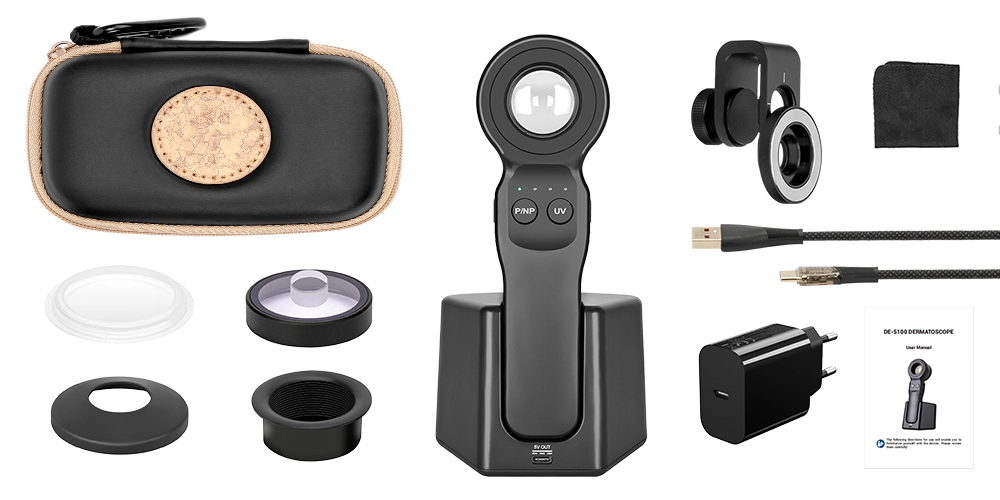
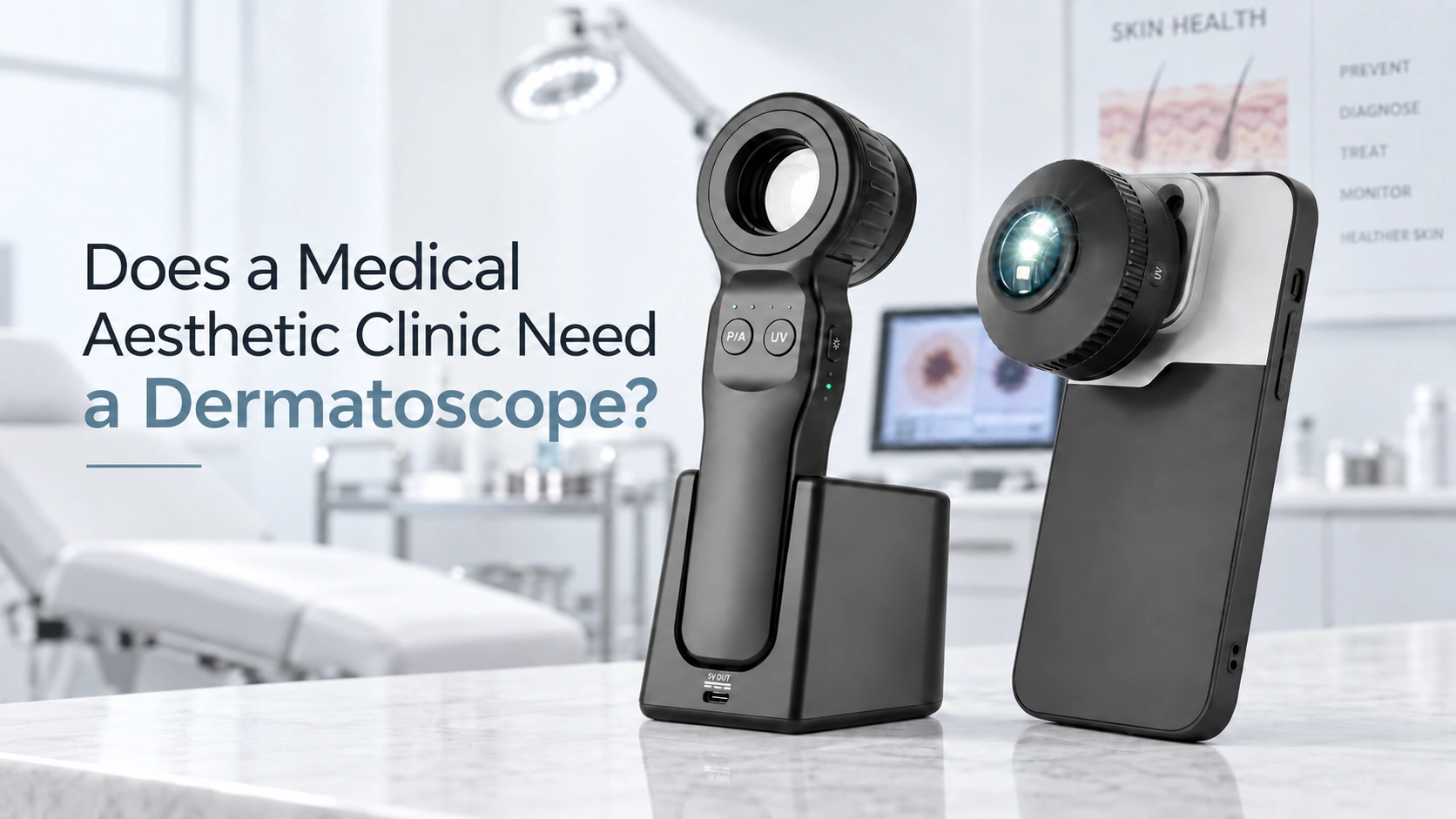
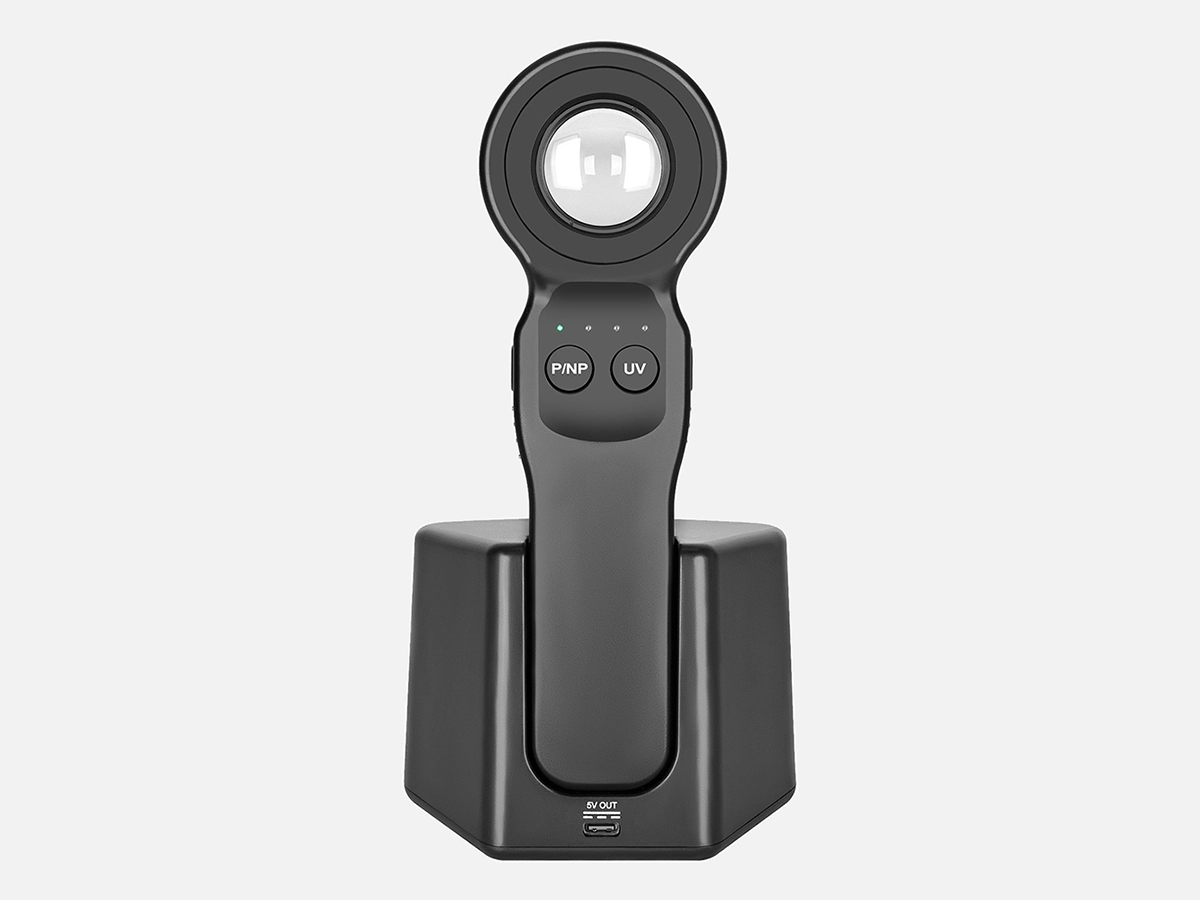
The IBOOLO DE-5100 Dermatoscope was developed with these practical requirements in mind. Rather than focusing on a single imaging method, it integrates multiple illumination modes—including cross-polarized light, non-polarized light, amber illumination, and 365 nm UV Light Dermoscopy—into one portable system. Combined with a magnetic smartphone adapter and a charging dock, the device supports a more streamlined workflow from visual examination to clinical image documentation.
This guide explores how the DE-5100 fits into modern dermatological practice, explains the role of different illumination technologies, compares it with conventional dermatoscopes and Woods Lamps, and highlights the factors clinicians and distributors should evaluate before investing in a high-end dermoscopy system.
Who Can Benefit from the DE-5100 Dermatoscope?
The DE-5100 is most relevant to users who need more than a basic dermatoscope. As one of IBOOLO’s advanced handheld medical optical instruments, it supports several professional application scenarios.
| User or setting | Main need | Relevant DE-5100 function |
| Dermatologists | Detailed lesion examination and serial records | Multi-mode illumination and smartphone imaging |
| General practitioners | Portable assessment during consultations | Handheld design and adjustable brightness |
| Medical students | Comparing structures under different lights | Four illumination modes |
| Veterinarians | Skin and coat fluorescence observation | 365 nm UV mode |
| Aesthetic or skin-management clinics | Consistent image records | High-definition optics and phone capture |
| Distributors | A differentiated professional product | Multi-mode platform, accessories, and customization |
What Does Each Light Mode Help Users Observe?
Different modes provide complementary views.
Cross-polarized light reduces surface glare and improves visualization of subsurface colors, vessels, and structures. Studies comparing polarized and non-polarized dermoscopy show that polarized imaging can reveal vascular and deeper features more clearly, while some superficial structures are better seen with non-polarized methods.
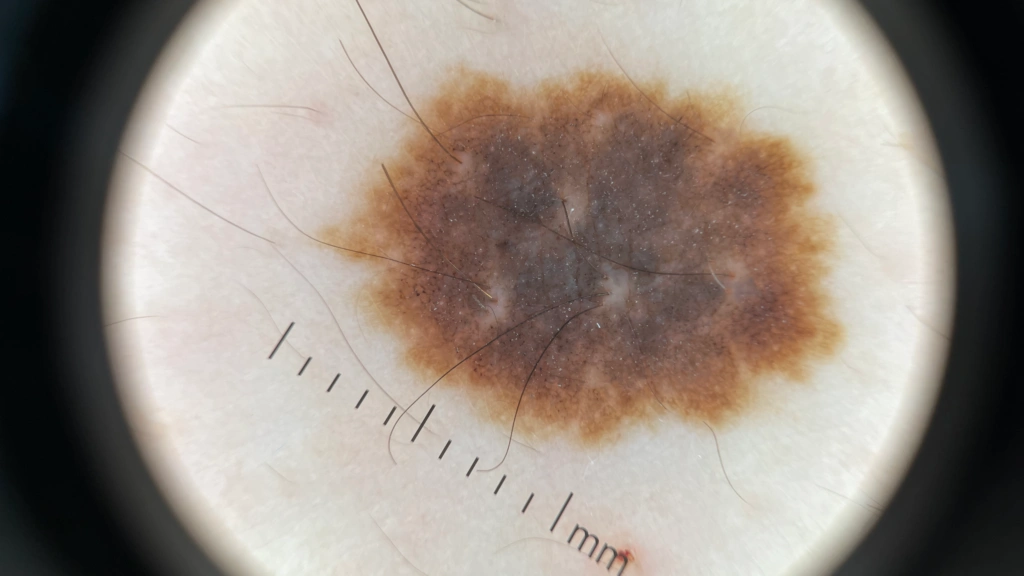
Parallel-polarized light preserves more surface reflection and can help display texture, scaling, and topographic details. Research on polarized skin imaging shows that parallel- and cross-polarized views provide different information about surface texture, pigmentation, and vascularity.
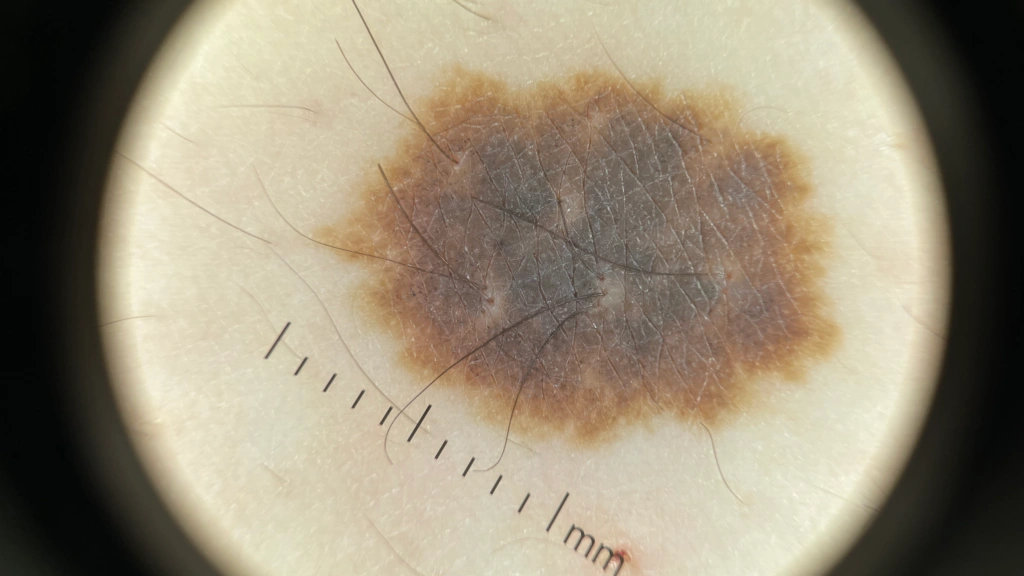
Amber light is designed to increase visual contrast in selected pigmented structures, providing an additional comparison mode when standard white illumination is insufficient.
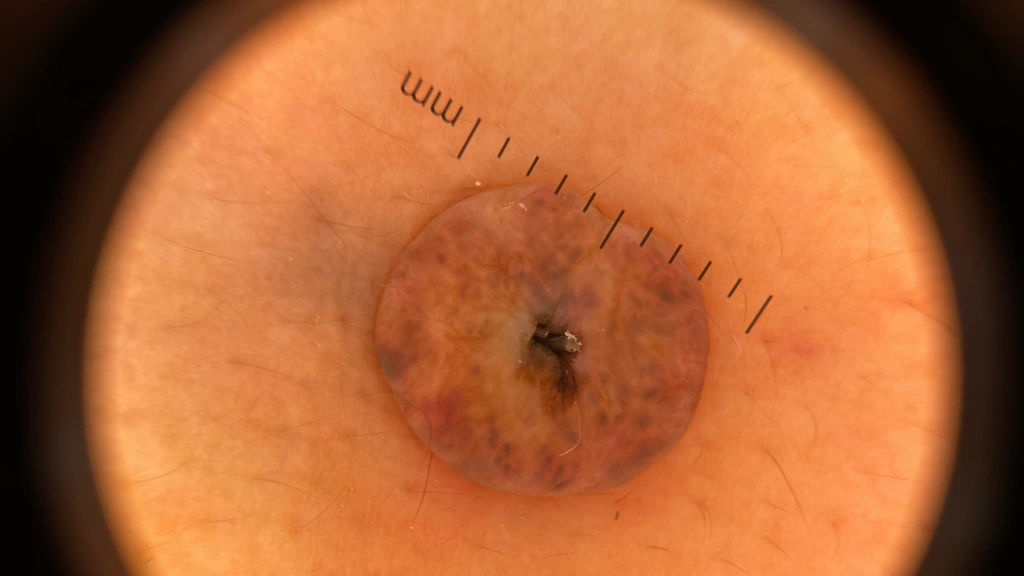
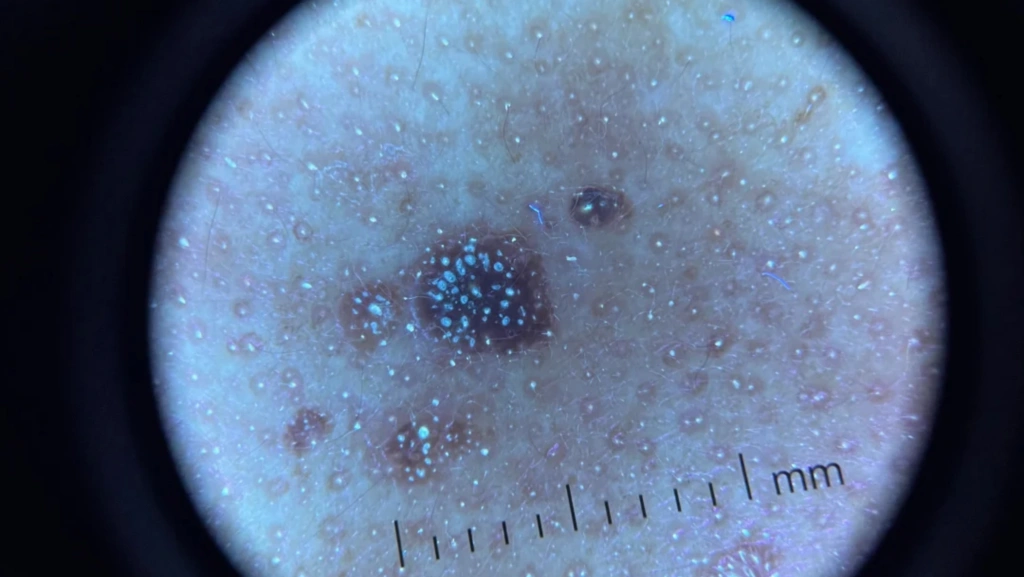
365 nm UV light excites visible fluorescence from certain skin-associated chromophores and microorganisms. UVFD research suggests that fluorescence patterns may add information about selected tumors, inflammatory disorders, infections, scalp findings, and lesion borders.
How Do the DE-5100 Specifications Improve Daily Clinical Work?
A professional instrument should not only provide good optical performance; it should also make daily operation more efficient. For the DE-5100, we focused on turning technical specifications into practical workflow advantages.
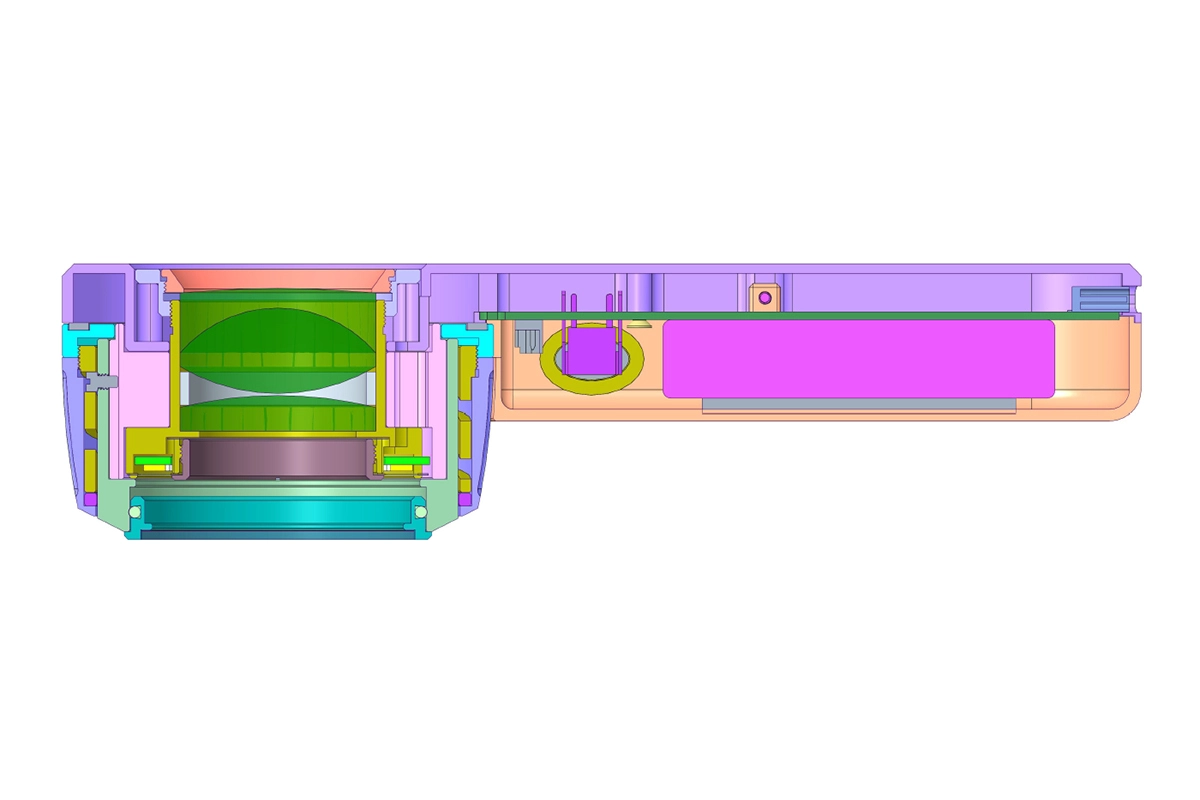
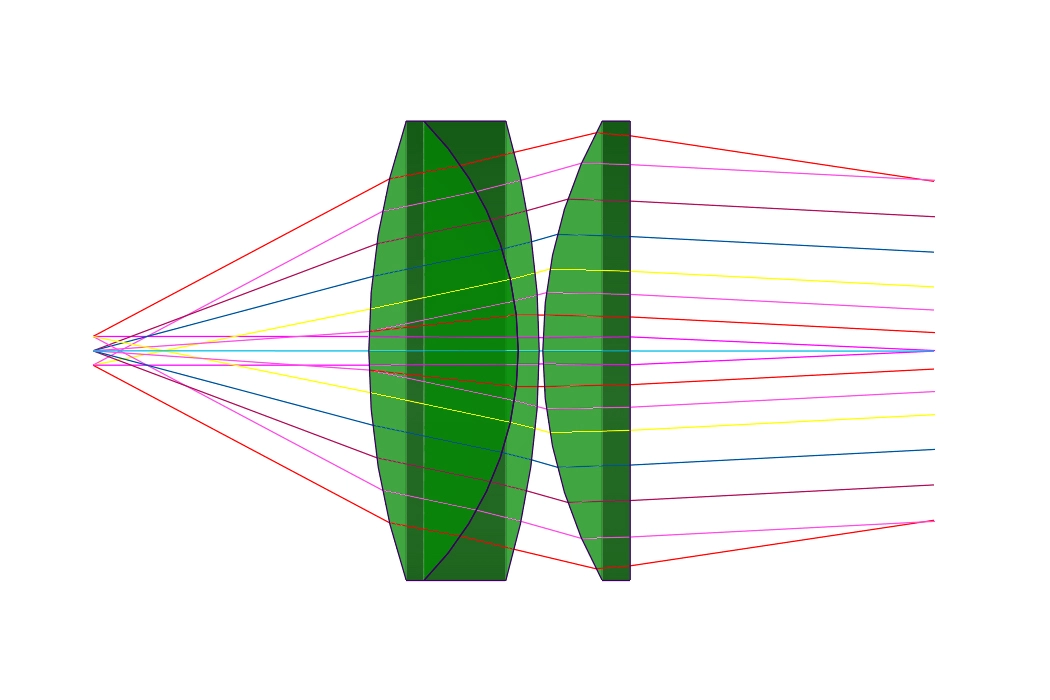
The 32mm large viewing area makes it easier to locate the target and observe nearby structures. It also improves comfort during direct examination and helps users align the dermatoscope with a smartphone camera. The optical system is designed to provide a clear image with controlled distortion, supporting both naked-eye observation and digital capture.
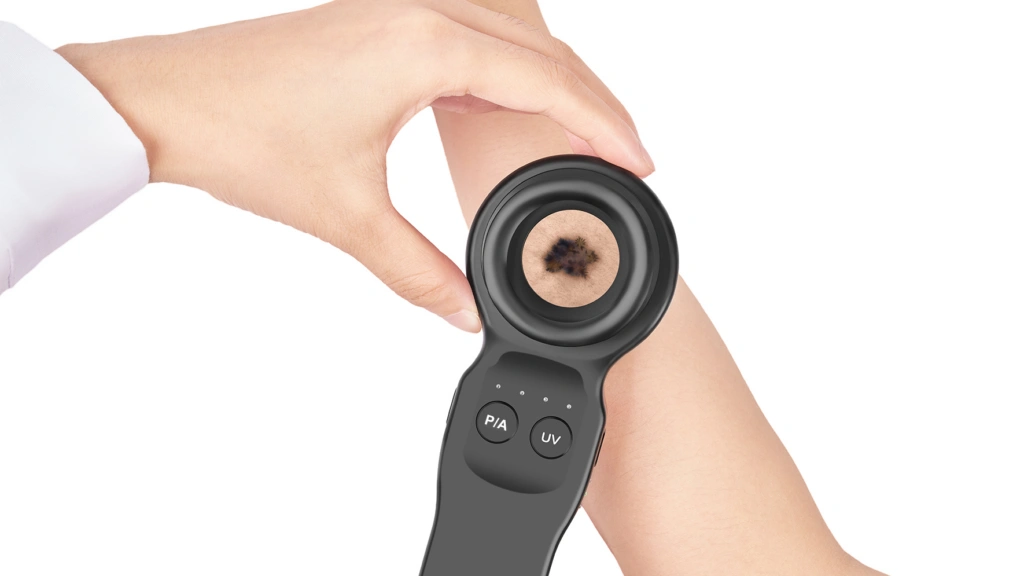
Three brightness levels allow users to adapt the illumination to different environments, anatomical locations, skin tones, and smartphone exposure settings. A lower brightness level may help reduce excessive reflection or overexposure, while a higher level may improve visibility in a bright consultation room.
The integrated 1500 mAh battery supports portable use, while the charging base gives the instrument a fixed storage position. After an examination, users can return the device to the same location instead of placing it in a drawer or repeatedly connecting a loose charging cable. This helps keep the working area more organized and makes the dermatoscope easier to access.
How Does the Magnetic Phone Adapter Improve Image Documentation?
A dermatoscope is no longer used only for real-time visual examination. Many clinics, educators, and distributors also require a reliable method for capturing and managing images. The DE-5100 supports this process through its Magnetic Phone Adapter.
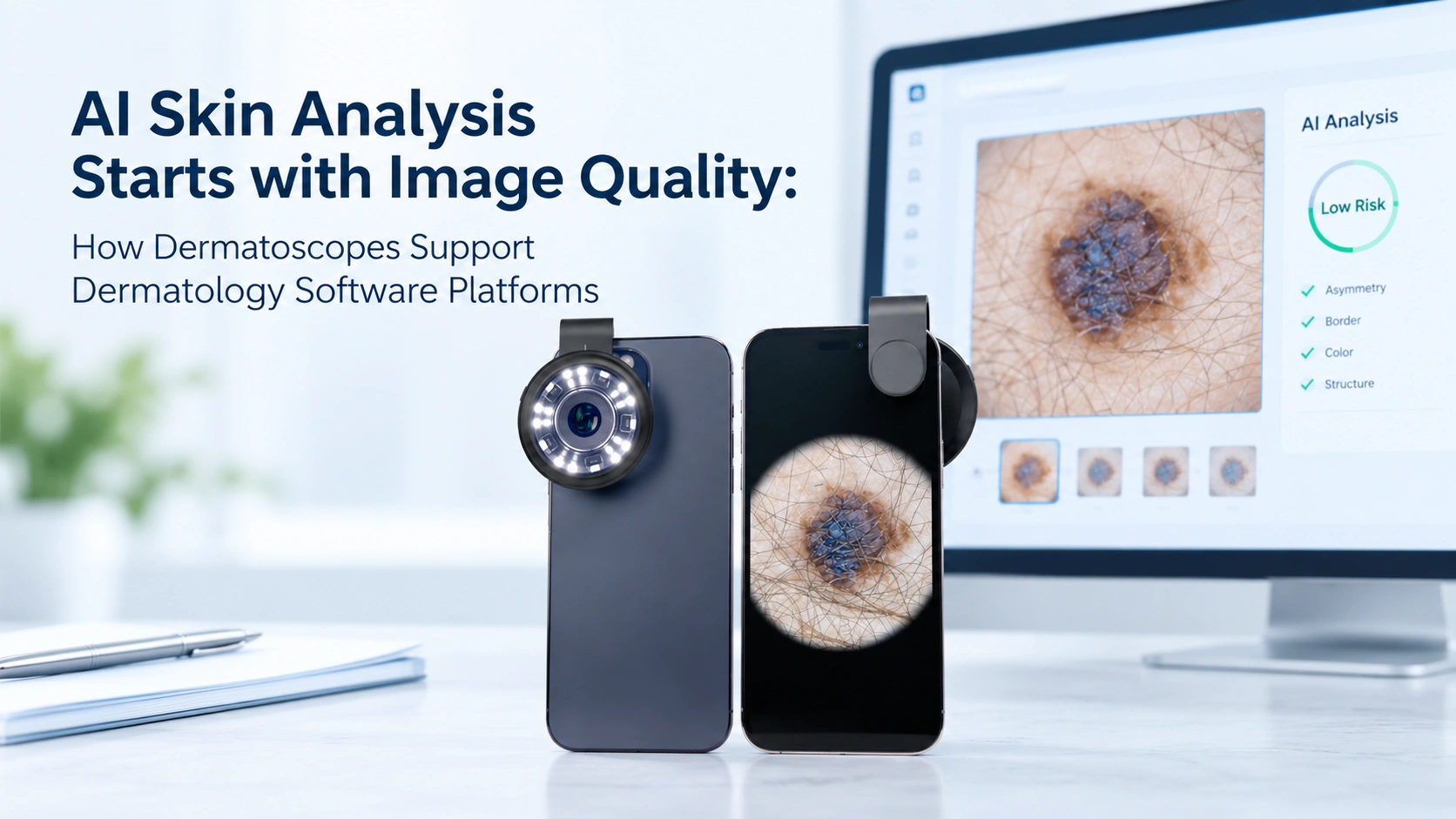
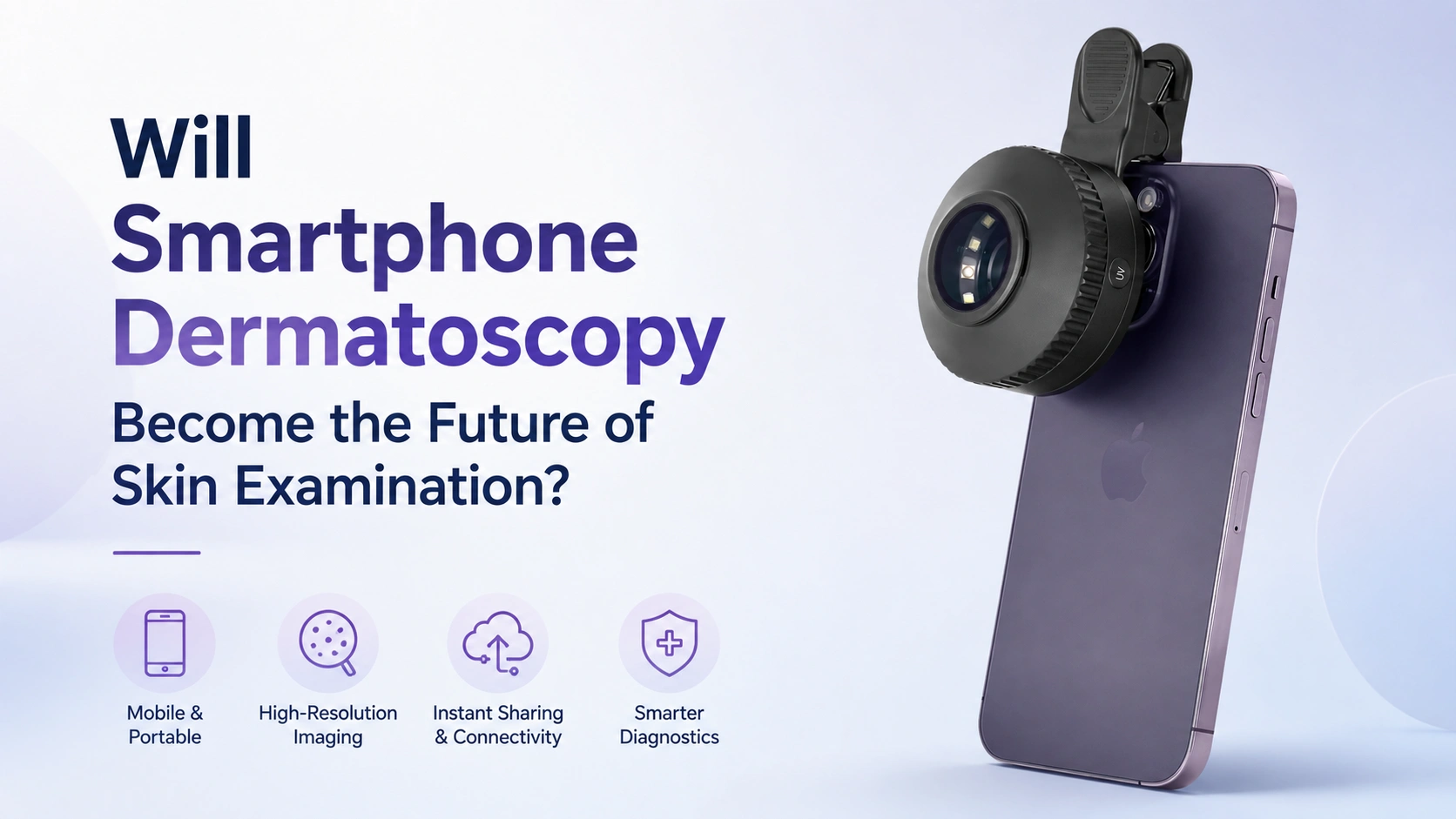
The adapter helps align the dermatoscope with a compatible smartphone camera, turning direct optical observation into a digital recording workflow. Users can capture images under different light modes and compare cross-polarized, parallel-polarized, amber, and UV views of the same location.
For consistent results, the smartphone lens and dermatoscope surface should be cleaned before use. The Magnetic Phone Adapter should be centered over the correct rear camera, and the image should be aligned before the final focus is adjusted. Users should then select the required light mode, choose an appropriate brightness level, and keep the viewing angle, distance, and pressure as consistent as possible.
How Does the DE-5100 Compare with Other Observation Options?
| Function | DE-5100 Dermatoscope | Woods Lamp | General Polarized Dermatoscope |
| Magnified observation | Yes | Usually limited | Yes |
| Cross-polarized light | Yes | No | Usually available |
| Parallel-polarized light | Yes | No | Configuration-dependent |
| Amber light | Yes | No | Usually unavailable |
| 365 nm UV illumination | Yes | Yes | Usually unavailable |
| Localized UVFD imaging | Yes | Limited magnification | No |
| Wide-area fluorescence observation | Limited | Strong advantage | No |
| Smartphone image capture | Supported with adapter | Configuration-dependent | Configuration-dependent |
| Charging-base workflow | Supported | Model-dependent | No |
| Portability | High | Varies | High |
A professional who only needs routine cross-polarized observation may prefer a simpler polarized dermatoscope. A clinic that mainly performs broad fluorescence screening may prioritize a Woods Lamp. The DE-5100 is more suitable for users who want polarized observation, surface comparison, amber illumination, localized UVFD, smartphone documentation, and device management in one system.
This integrated approach makes the DE-5100 suitable as skin lesion detection equipment for professional visual assessment, while still maintaining the portability expected from handheld medical optical instruments.
What Are the Most Common Questions About the DE-5100?
(1) Is the DE-5100 compatible with all smartphones?
Yes. The DE-5100 is compatible with almost all smartphone models on the market, including both iPhone and Android devices. The package includes a universal phone clip that supports attachment to different smartphone models.
(2) Can I use the dermatoscope with a protective phone case?
If you use our dedicated phone case, it is fully compatible. For standard phone cases, some thin cases may be compatible, while thick cases may affect magnetic stability and optical alignment. Removing the phone case usually provides a more reliable connection.
(3) Does the DE-5100 support non-contact observation?
Yes. The DE-5100 package includes a non-contact adapter. Simply unscrew and remove the original contact cap, then replace it with the non-contact cap to perform non-contact dermoscopic observation.
(4) Can the DE-5100 UV mode connect to a smartphone for image capture and storage?
Yes. The 365nm UV light of the DE-5100 is specifically designed for smartphone-connected imaging. When connected to a smartphone, it can clearly capture and record various fluorescence reactions.
(5) Can the DE-5100 be customized?
Yes. IBOOLO supports customization of the DE-5100, including logo engraving, customized packaging, manuals in different languages, and even customized exterior designs and internal optical system configurations.
Why Does the DE-5100 Create a More Complete Dermoscopy Workflow?
The value of the DE-5100 does not come from one individual specification. It comes from the integration of high-definition dermoscopy, multiple illumination modes, smartphone image recording, portable operation, and organized charging management.
At IBOOLO, we designed the DE-5100 to help professionals move efficiently from direct observation to multi-light comparison and digital documentation.