





Article
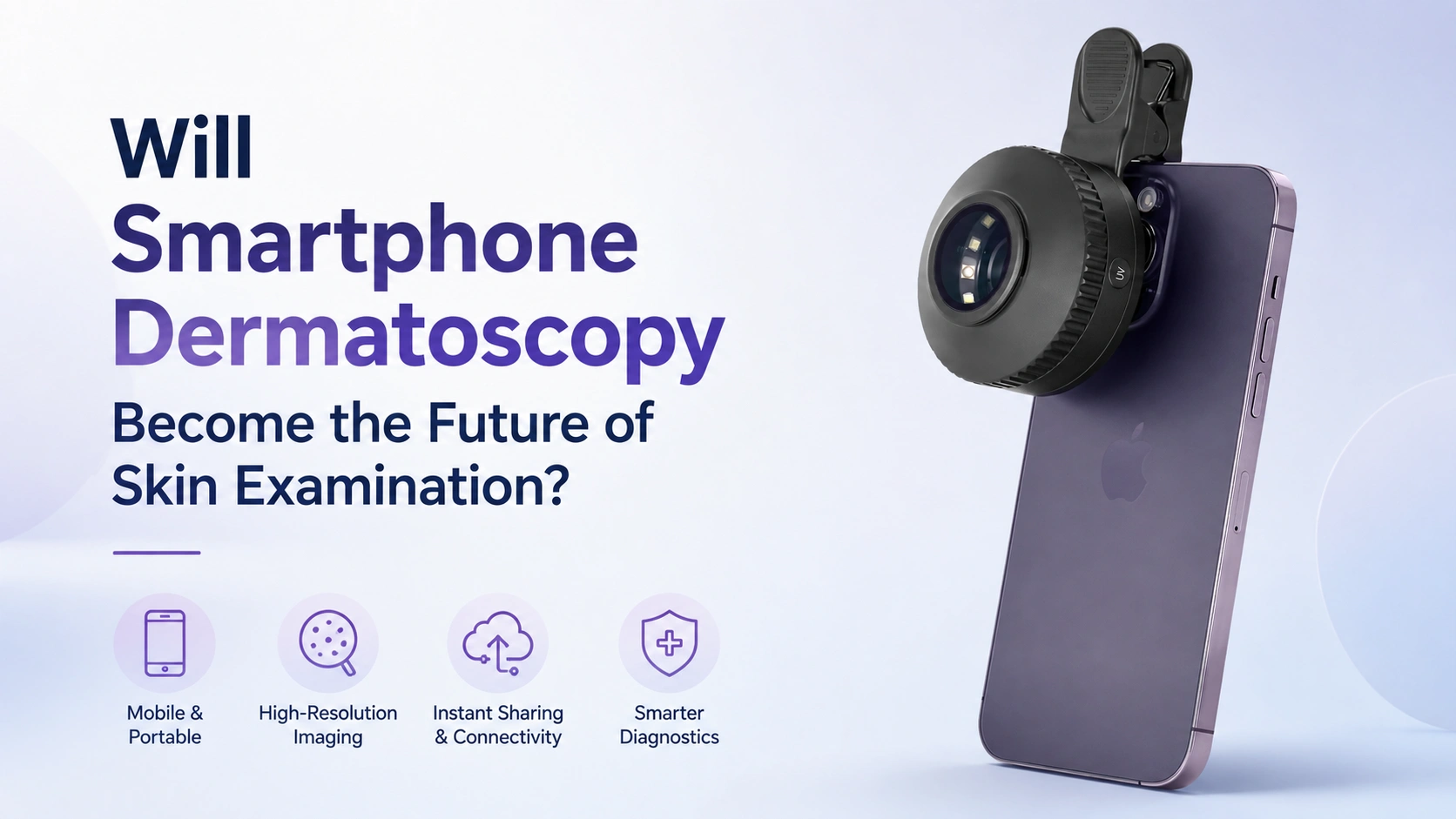
Will Smartphone Dermatoscopy Become the Future of Skin Examination?
Smartphones are now widely used to capture, store, share, and review medical images. In dermatology, this has created growing interest in smartphone dermatoscopy. By combining a dermatoscope with a smartphone camera, clinicians can capture magnified images of skin lesions without relying only on visual memory or written descriptions. However, the value of smartphone dermatoscopy does…
Smartphones are now widely used to capture, store, share, and review medical images. In dermatology, this has created growing interest in smartphone dermatoscopy. By combining a dermatoscope with a smartphone camera, clinicians can capture magnified images of skin lesions without relying only on visual memory or written descriptions.
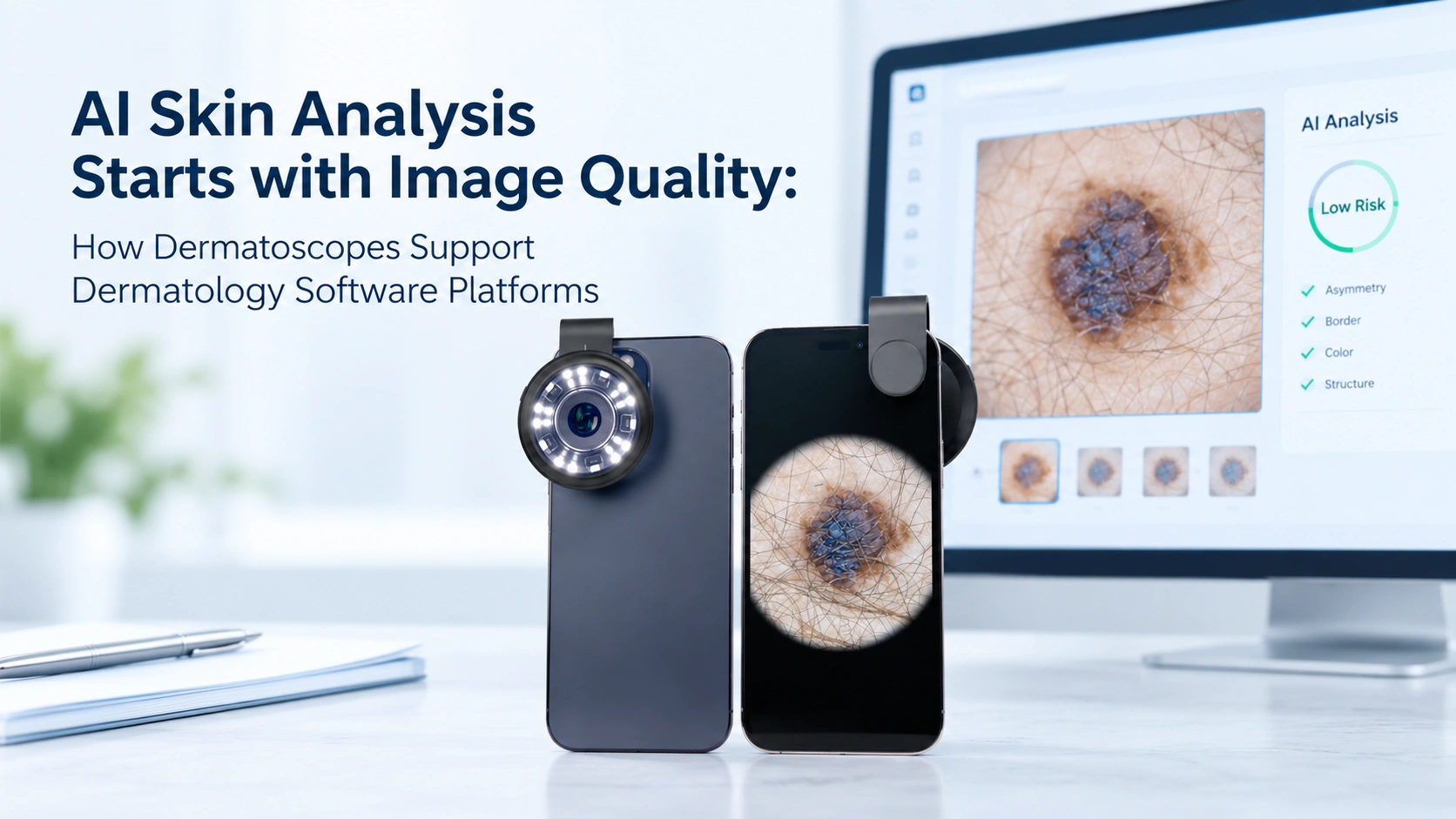
However, the value of smartphone dermatoscopy does not come from the smartphone alone. Image quality still depends heavily on the optical system, illumination, magnification, focus, and the way the image is captured. As artificial intelligence and digital skin analysis continue to develop, the quality and consistency of the original image may become even more important.
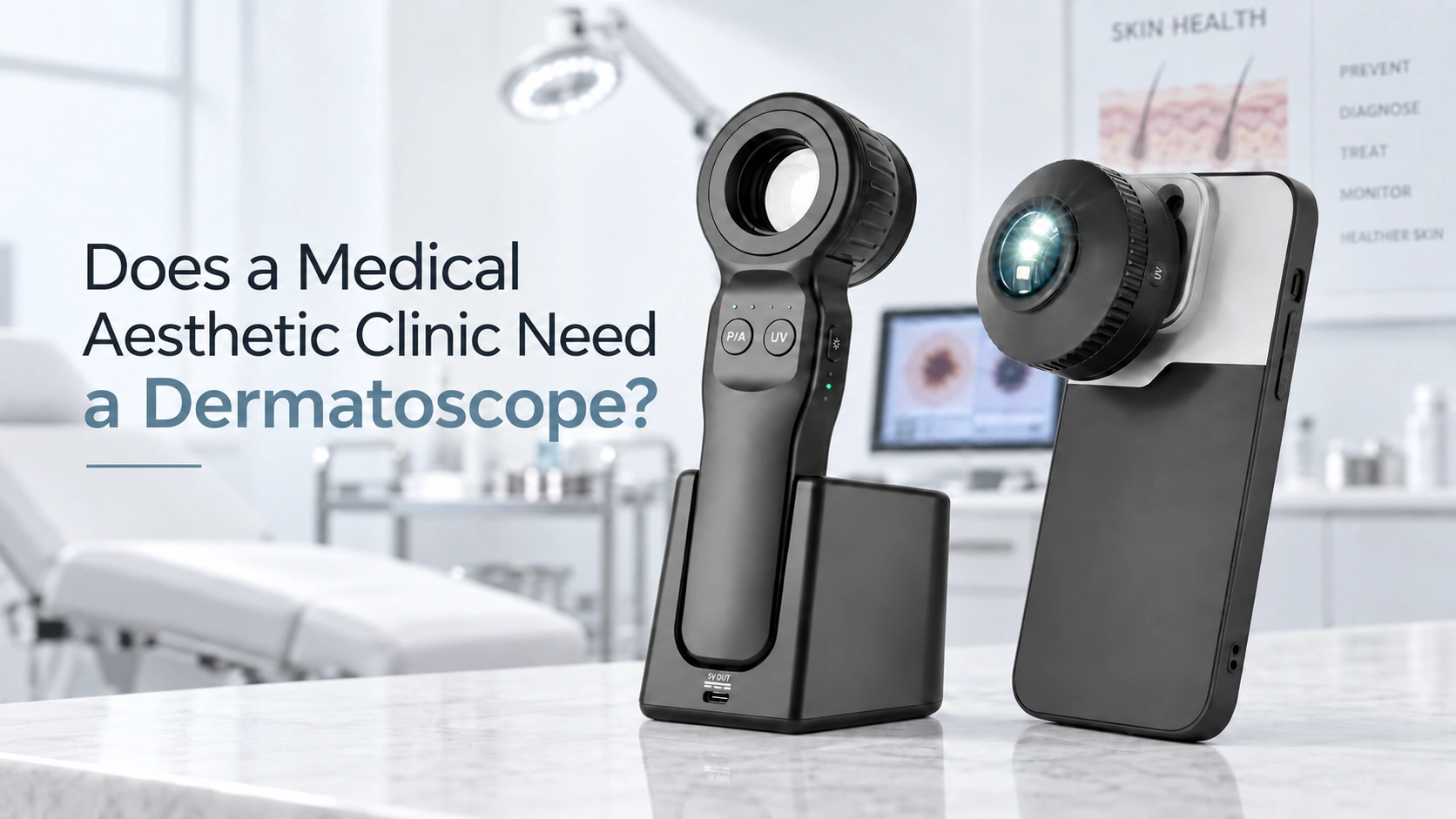
IBOOLO currently offers several smartphone-compatible dermatoscopes, including the DE-300, DE-400, and DE-500. These products represent different levels of magnification, illumination, and optical performance. Their development also raises a broader question: will smartphone dermatoscopy become an important part of the future of skin examination?
What Is Smartphone Dermatoscopy?
Smartphone dermatoscopy combines a dermatoscope with a smartphone camera to capture magnified images of the skin. The dermatoscope provides controlled illumination and optical magnification, while the smartphone provides the camera, display, storage, and communication functions. This combination can make dermoscopic imaging more convenient in many clinical and professional settings. Images can be captured during an examination, reviewed on the phone screen, stored in a patient record when appropriate, or shared through established clinical workflows.
A smartphone camera alone is not a replacement for a dermatoscope. Standard smartphone photography is affected by ambient light, reflections, distance, camera settings, and the limitations of ordinary camera optics. A dermatoscope creates a more controlled imaging condition and allows the camera to record details that may not be clearly visible in a normal photograph.
For this reason, the future of smartphone dermatoscopy depends on the integration of two different systems. The smartphone provides digital imaging and computing capabilities, while the dermatoscope remains responsible for the optical and illumination conditions required for dermoscopic examination.
How Do the IBOOLO DE-300, DE-400, and DE-500 Differ?
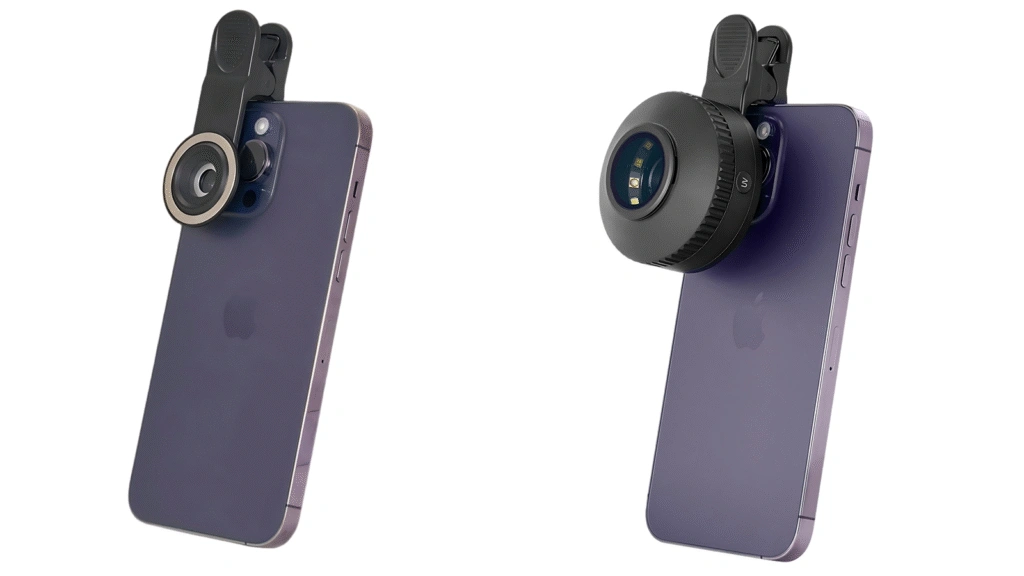
The IBOOLO DE-300, DE-400, and DE-500 are designed for smartphone dermatoscopy, but they provide different imaging configurations.
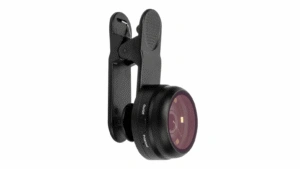
The DE-300 provides 6X magnification and supports both polarized and non-polarized illumination. Its lower magnification can provide a wider view of the observed area, making it suitable when portability and a broader field of view are important.
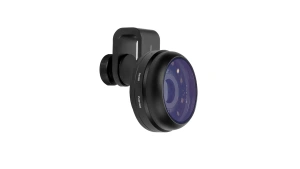
The DE-400 increases the magnification to 10X and also supports polarized and non-polarized light. A higher magnification can help reveal finer dermoscopic structures while maintaining compatibility with smartphone image capture.
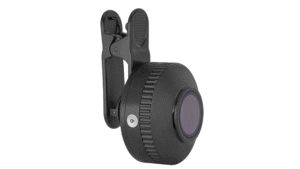
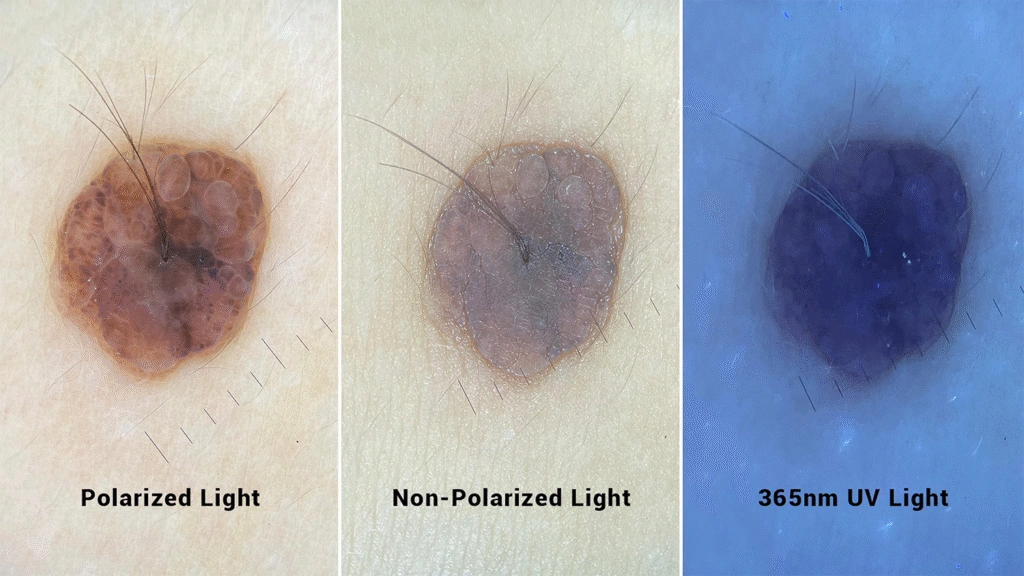
The DE-500 also provides 10X magnification and supports polarized light, non-polarized light, and UV light. In addition to conventional dermoscopic examination, the UV mode can provide supplementary information for observing certain non-pigmented skin conditions and fungal infections.
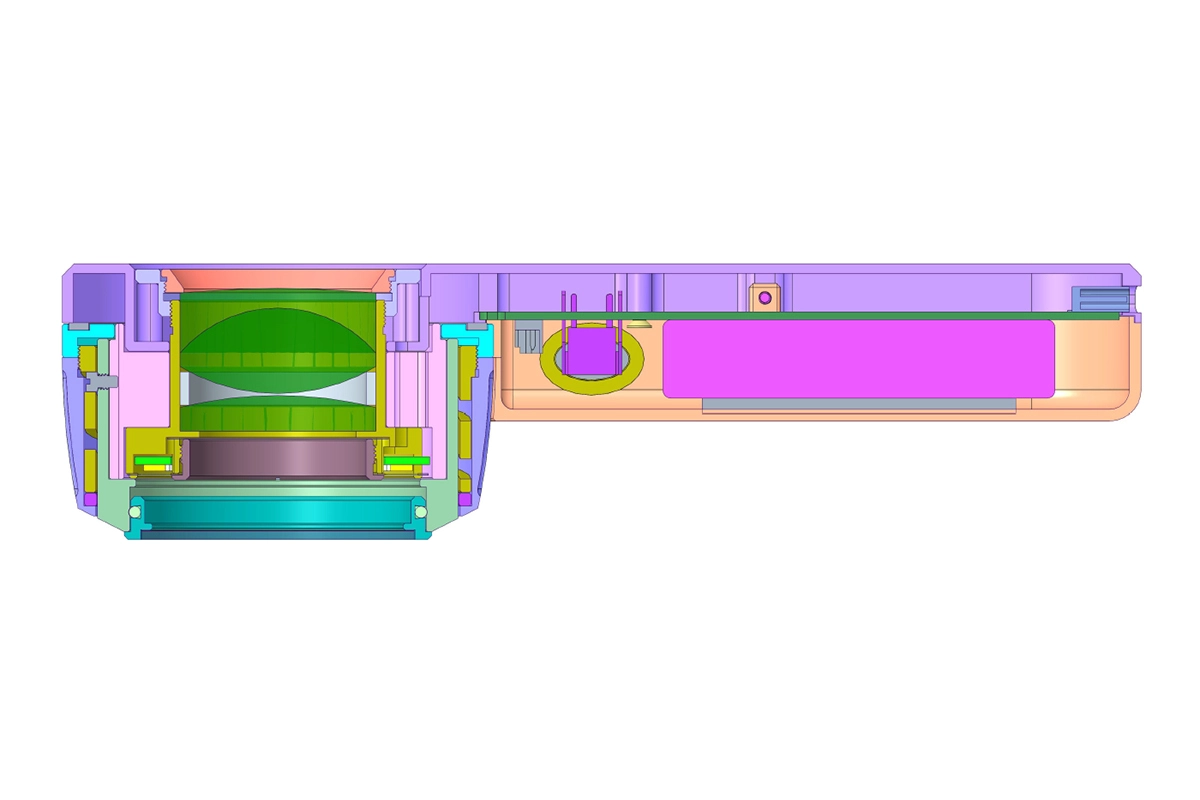
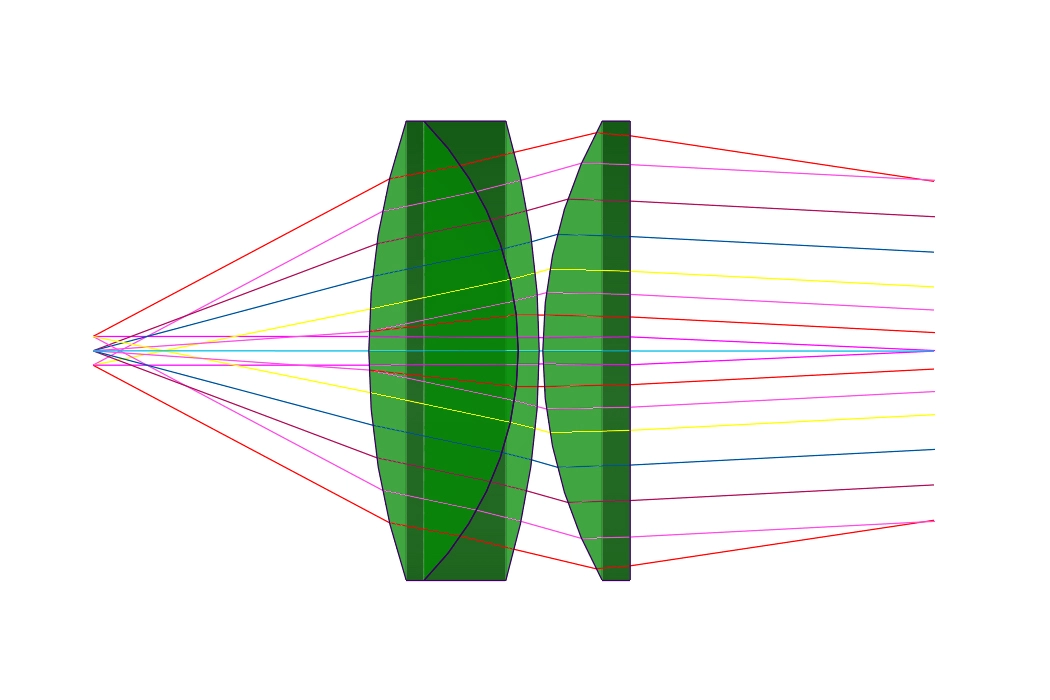
The optical systems are also not identical. From the DE-300 to the DE-500, the lens configuration and optical performance are progressively upgraded. A more advanced model is designed to provide improved image quality, particularly in terms of detail reproduction and overall imaging performance. This is important because magnification alone does not determine whether an image is useful. A highly magnified image can still have limited diagnostic value if the image lacks sufficient sharpness, contrast, or optical quality.
Choose Your IBOOLO Dermatoscope
Explore our dermatoscope range and choose the model that best fits your skin examination and imaging needs.
IBOOLO DE-300
A practical and compact dermatoscope designed for everyday skin examination.
IBOOLO DE-400
An enhanced dermatoscope designed for clear and detailed skin examination.
IBOOLO DE-500
A compact pocket dermatoscope designed for convenient smartphone-based dermoscopic imaging.
Why Is Image Quality Important for Digital Skin Analysis?
The number of digital skin analysis tools and AI-based image analysis systems has increased rapidly. These systems are designed to identify patterns, measure changes, classify images, or provide decision support. However, the quality of the analysis is closely connected to the quality of the image provided to the system.
An AI system cannot recover clinical information that was not properly captured in the original image. If an image is blurred, poorly focused, affected by reflections, or captured under inconsistent lighting, important visual features may be missing or distorted. Even a technically advanced analysis system may produce unreliable results when the input image does not meet appropriate quality requirements.
Consistency is also important. Images captured under similar optical conditions are generally easier to compare over time and easier to use in structured digital workflows. Smartphone dermatoscopy can support this process because the dermatoscope helps standardize magnification and illumination while the smartphone provides a convenient digital camera platform.
For this reason, the development of skin analysis software and the development of high-quality image acquisition equipment should be viewed as connected processes. Better software increases the value of good images, while better images provide a stronger foundation for digital analysis.
How Does Polarized Light Support Dermoscopic Examination?
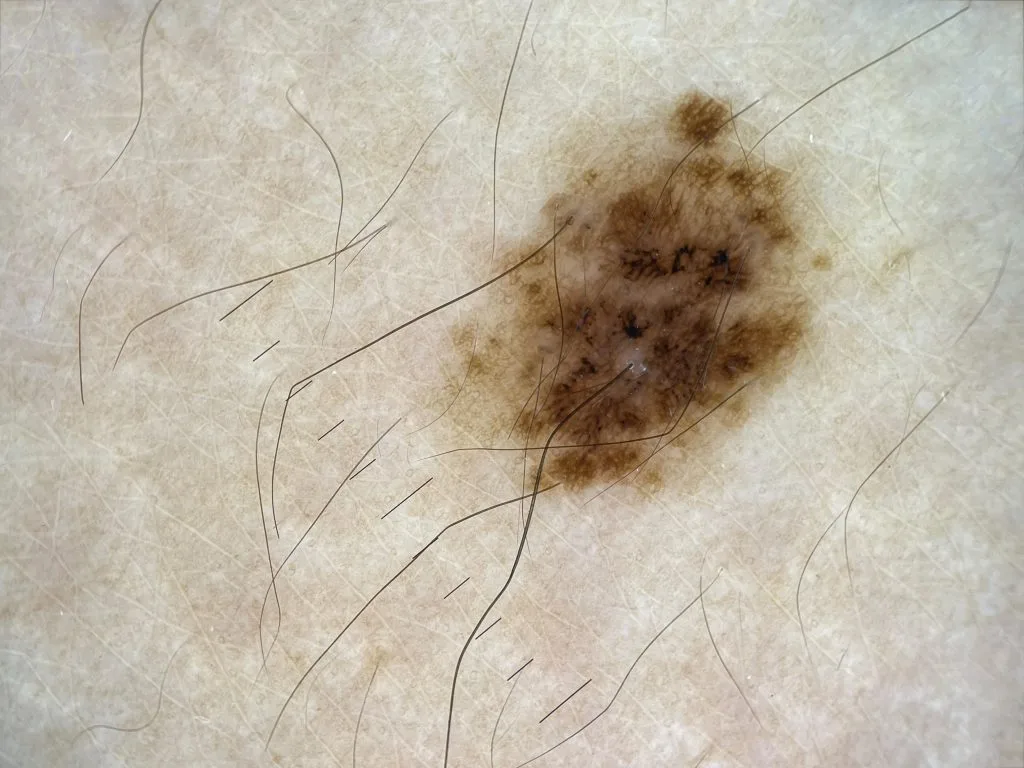
Polarized illumination is one of the important features of modern dermatoscopy. Light reflected directly from the skin surface can create glare and reflections that interfere with the observation of subsurface structures. A polarized optical system helps reduce these surface reflections and can improve the visibility of certain structures below the skin surface.
For smartphone dermatoscopy, polarized illumination also helps the smartphone camera capture a cleaner image with less distracting surface glare. This can be particularly useful when the goal is to document a lesion and compare images over time.
However, polarized light is not always the only mode that should be used. Some superficial structures may be better observed under non-polarized illumination. The ability to switch between illumination modes gives the examiner more flexibility and allows images to be captured under different optical conditions.
The DE-300 and DE-400 both provide polarized and non-polarized modes, while the DE-500 adds UV illumination as a further option.
Will Smartphone Dermatoscopy Become the Future of Skin Examination?
Smartphone dermatoscopy is unlikely to replace every conventional examination method, but it is likely to play an increasingly important role in digital skin imaging. Its main advantage is not simply that it uses a smartphone. Its value comes from combining professional optical imaging with a device that already provides a camera, display, storage, processing power, and software connectivity.
As digital documentation, image comparison, and AI-assisted analysis continue to develop, smartphone-compatible dermatoscopes may become an increasingly practical part of professional skin examination workflows. And as digital skin imaging continues to evolve, IBOOLO will continue to develop practical dermoscopy solutions that help make high-quality image acquisition more accessible and efficient.