






Article
IBOOLO Dermatoscope Comparison Guide: Which Model Is Right for You?
Dermatoscopes have become important tools for skin observation and image documentation. Different users have different needs. Some prefer direct visual examination, while others rely on smartphones for image capture and sharing. Some need a larger field of view, while others focus on portability. The IBOOLO dermatoscope series includes several models designed for different observation methods,…
Dermatoscopes have become important tools for skin observation and image documentation. Different users have different needs. Some prefer direct visual examination, while others rely on smartphones for image capture and sharing. Some need a larger field of view, while others focus on portability.
The IBOOLO dermatoscope series includes several models designed for different observation methods, budgets, and usage scenarios. Understanding the differences between these models can help users select the device that best matches their requirements.
| Model | Magnification | Field of View (FOV) | LED Lights (Polarized / Non-polarized / Amber / UV) | Battery (mAh) | Connectivity | Price |
| DE-4100 PRO | 10X | 32 mm | 12 / 6 / 4 / 4 | 1500 | Naked eye, phone, tablet, camera | 799 USD |
| DE-4100 | 10X | 32mm | 12 / 6 / 4 / 0 | 1500 | Naked eye, phone, tablet, camera | 699 USD |
| DE-3100 PRO | 10X | 25mm | 8 / 4 / 0 / 4 | 1000 | Naked eye, phone, tablet, camera | 599 USD |
| DE-3100 | 10X | 25mm | 18 / 6 / 6 / 0 | 1000 | Naked eye, phone, tablet, camera | 499 USD |
| DE-500 | 10X | 17mm | 8 / 4 / 0 / 4 | 300 | Phone/tablet | 399 USD |
| DE-400 | 10X | 17mm | 10 / 5 / 0 / 0 | 200 | Phone/tablet | 179 USD |
| DE-300 | 6X | 12mm | 4 / 4 / 0 / 0 | 200 | Phone/tablet | 109 USD |
What Types of Dermatoscopes Does IBOOLO Offer?
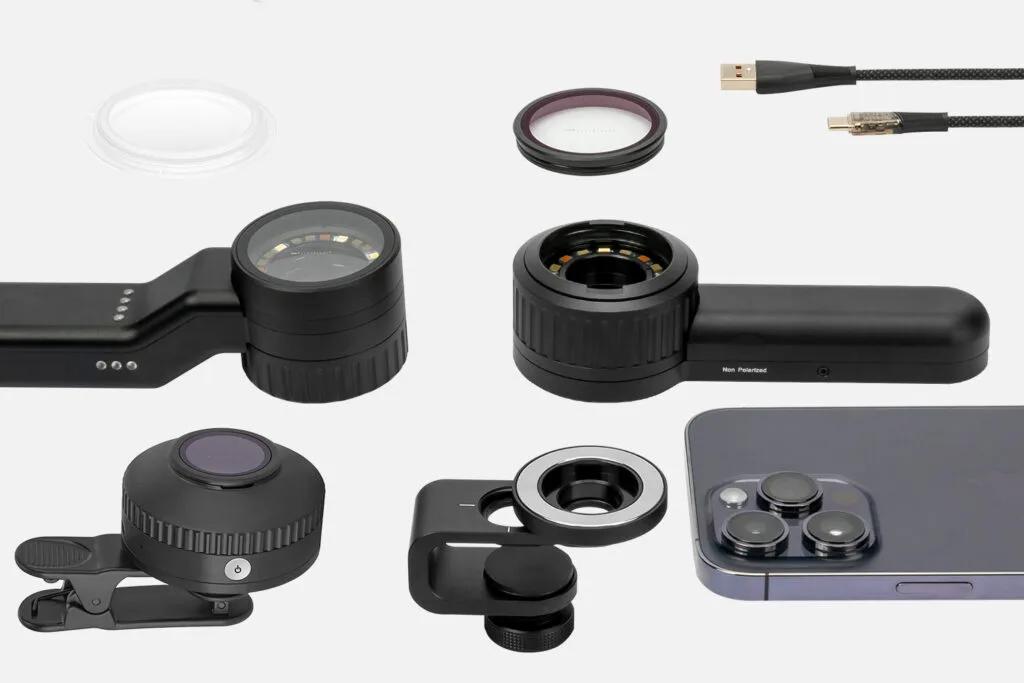
IBOOLO divides its dermatoscope products into two categories: handheld dermatoscopes and pocket dermatoscopes.
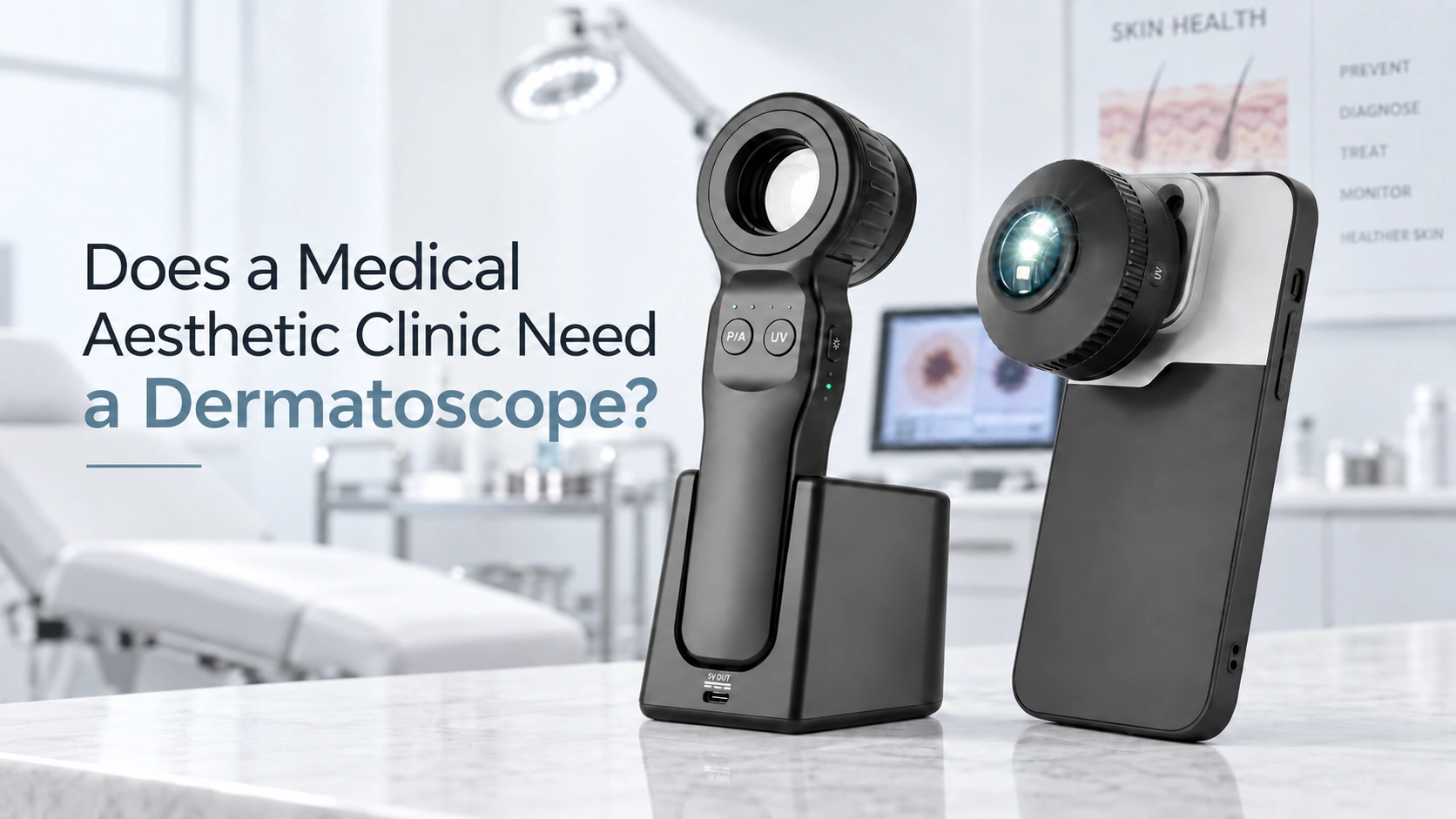
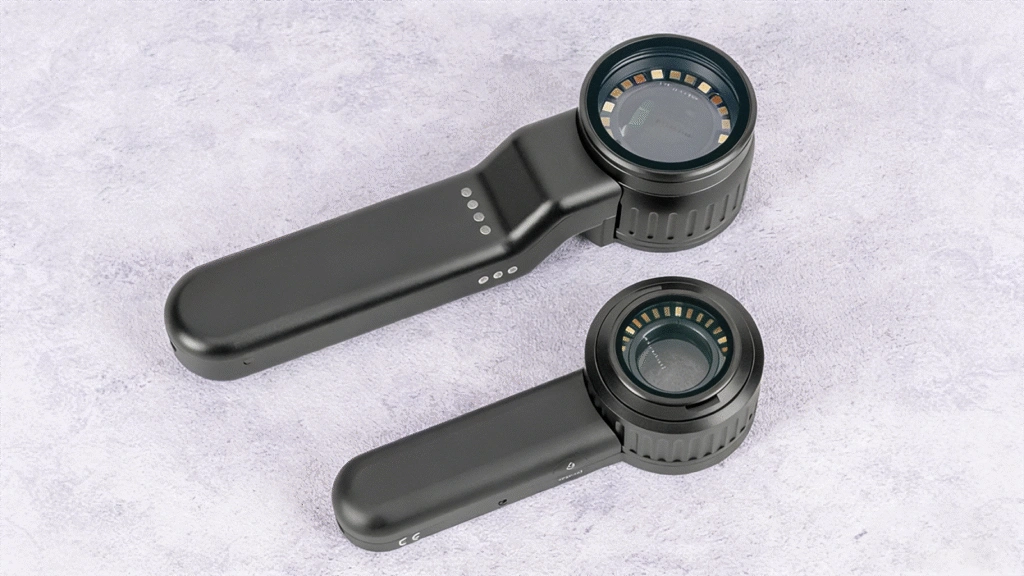
The handheld series includes DE-4100 PRO, DE-4100, DE-3100 PRO, and DE-3100. These models support direct observation through the optical lens. Users can examine skin lesions with the naked eye and also connect the device to smartphones, tablets, or cameras for image capture and recording.
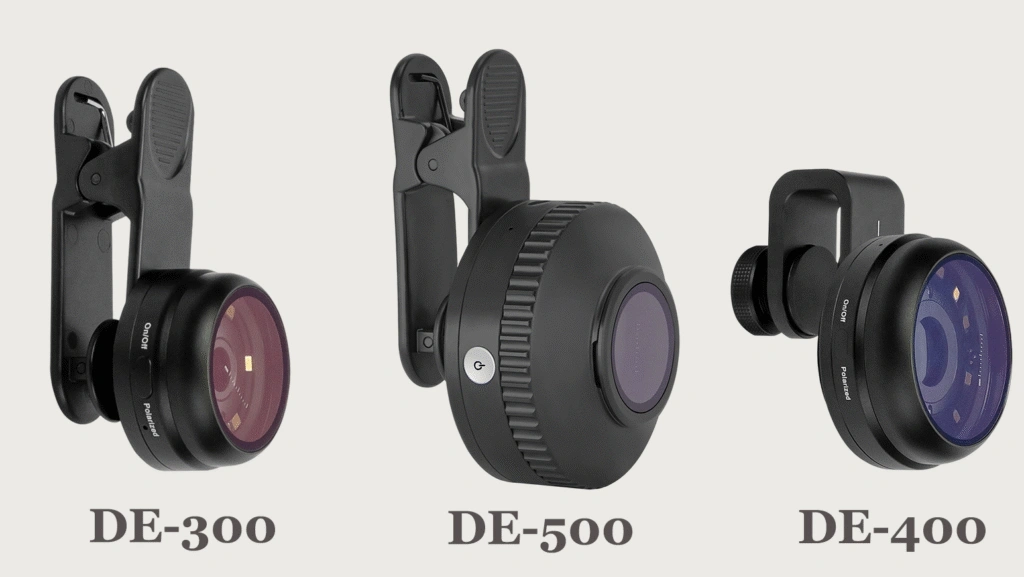
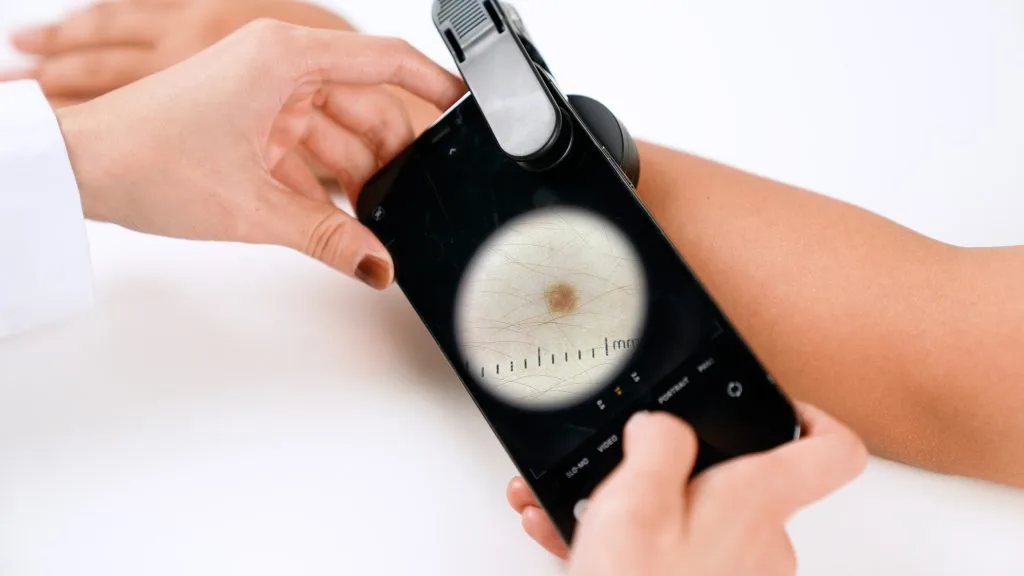
The pocket series includes DE-500, DE-400, and DE-300. These models are designed primarily for mobile devices. They connect to smartphones or tablets for observation and documentation. Their smaller size makes them suitable for users who prefer portable equipment.
Choosing between these two categories is often the first step in selecting the right dermatoscope.
Why Does Magnification Matter?
Magnification affects the level of detail visible during skin examination. Most IBOOLO models use a 10X optical magnification lens.
The DE-4100 PRO, DE-4100, DE-3100 PRO, DE-3100, DE-500, and DE-400 all provide 10X magnification. This level allows detailed observation of skin structures and supports routine dermoscopic examination.
The DE-300 uses a 6X magnification lens. It is designed as an entry-level model that offers a wider viewing experience with simpler operation.
Higher magnification generally allows more detailed observation, while lower magnification may provide a broader overview. Users should select the magnification level according to their observation needs.
How Does Field of View Influence Observation?
Field of view determines the visible area during examination. A larger field of view allows users to observe larger lesions or surrounding structures without repositioning the device.
The DE-4100 PRO and DE-4100 provide a 32 mm field of view, which is the largest in the IBOOLO product line. This large observation area improves efficiency when examining larger skin regions.
The DE-3100 PRO and DE-3100 offer a 25 mm field of view. This size balances detailed observation and practical portability.
The DE-500 and DE-400 provide a 17 mm field of view, making them suitable for compact mobile observation.
The DE-300 offers a 12 mm field of view and focuses on basic observation needs.
Users who frequently examine larger areas may benefit from larger fields of view, while compact devices may be sufficient for occasional or mobile use.
What Lighting Systems Are Available in Different Models?
Lighting technology plays an important role in dermoscopy because different light sources reveal different skin structures.
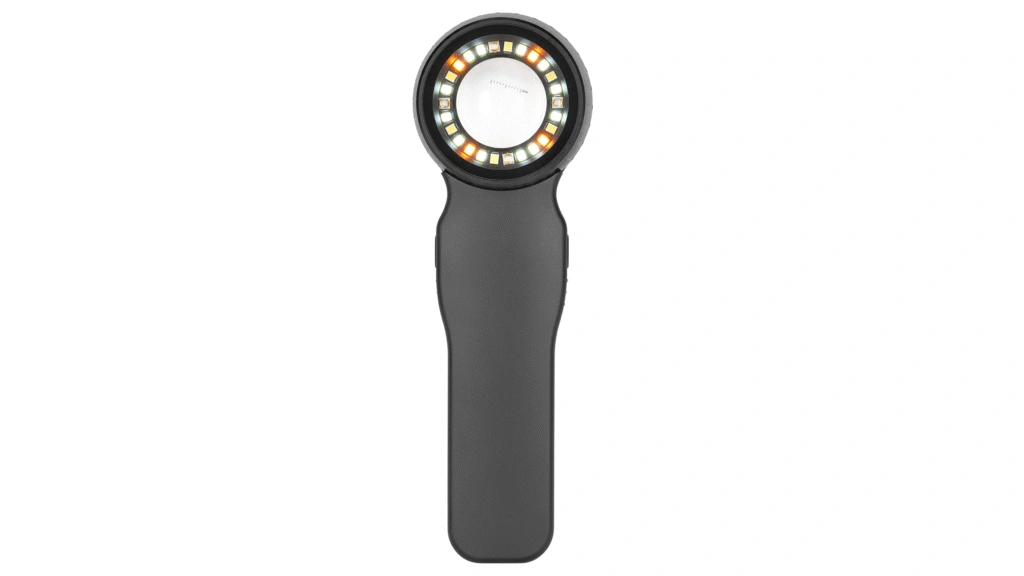
The DE-4100 PRO provides the most complete lighting system. It includes 12 polarized LEDs, 6 non-polarized LEDs, 4 amber LEDs, and 4 ultraviolet LEDs.
The DE-4100 uses the same configuration except for ultraviolet lighting.
The DE-3100 contains 18 polarized LEDs and 6 amber LEDs, providing the largest number of polarized LEDs in the series.
The DE-3100 PRO and DE-500 include ultraviolet lighting but do not contain amber LEDs.
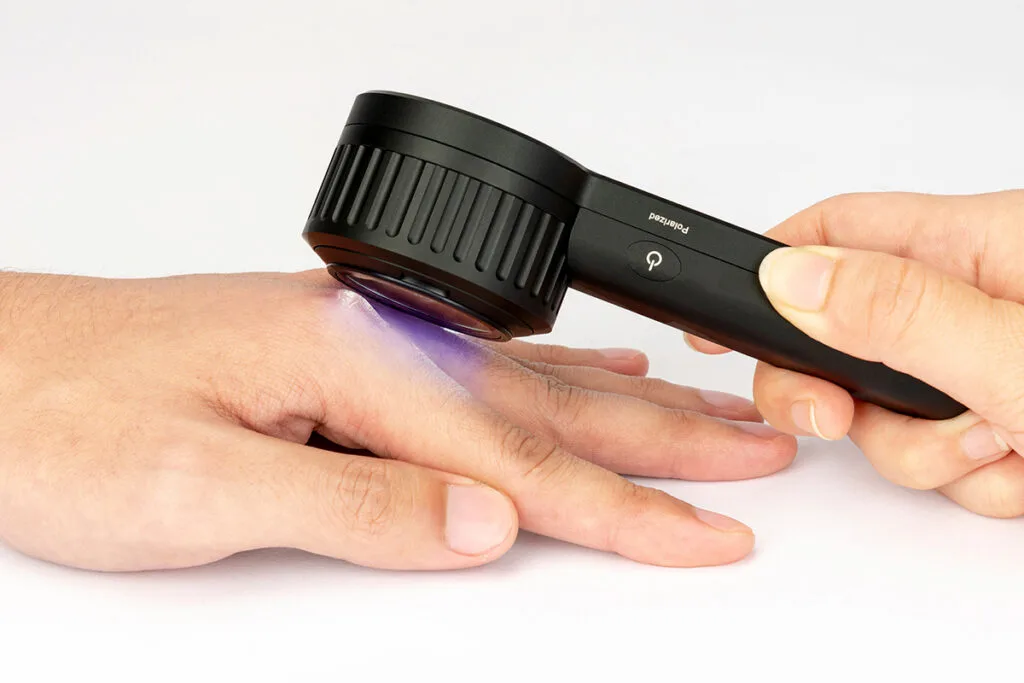
The DE-400 and DE-300 use basic white light illumination without amber or ultraviolet modes.
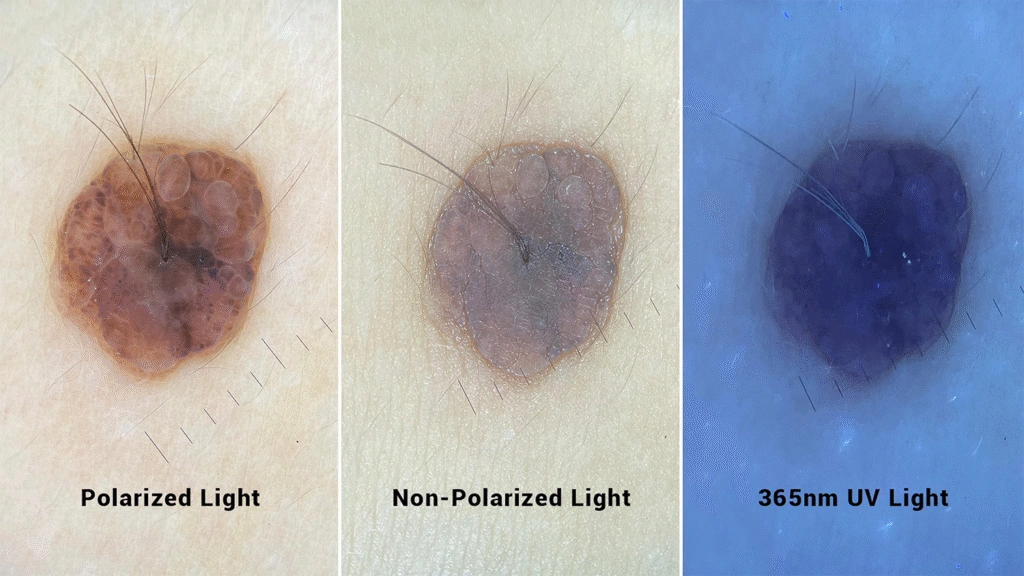
Polarized light helps reduce skin surface reflections. Non-polarized light supports contact examination. Amber light may improve visualization under specific conditions, while ultraviolet light provides additional observation options.
The choice of lighting system depends on the user’s examination requirements.
How Important Is Battery Capacity?
Battery capacity directly affects operating time and overall convenience during dermoscopic examinations.
The DE-4100 PRO and DE-4100 are equipped with 1500 mAh batteries, providing approximately 6 to 8 hours of continuous operation. Their larger battery capacity supports extended examination sessions and reduces the need for frequent charging.
The DE-3100 PRO and DE-3100 use 1000 mAh batteries and also offer approximately 6 to 8 hours of continuous use, balancing long operating time with a more compact design.
The DE-500 features a 300 mAh battery, supporting around 1.5 to 2 hours of continuous operation. Its smaller battery contributes to a lighter and more portable device.
The DE-400 and DE-300 use compact 200 mAh batteries, providing approximately one hour of continuous use while keeping the devices lightweight and easy to carry.
Users who perform long examination sessions or work throughout the day may benefit from the larger batteries in the DE-4100 and DE-3100 series. Users who prioritize portability and occasional mobile observation may find the smaller pocket models sufficient for their needs.
How Should You Choose Between Features and Budget?
Selecting a dermatoscope is not simply about choosing the model with the most features.
Some users need direct observation, large fields of view, and multiple lighting modes. Others mainly require smartphone imaging and portability.
Handheld dermatoscopes usually provide more observation methods and larger batteries. Pocket dermatoscopes emphasize lightweight design and lower cost.
The most suitable dermatoscope is not necessarily the most advanced model. The best choice is the one that provides the functions required for the intended application without unnecessary features.