




Article
Why Do So Many Doctors Prefer the DE-3100 PRO Among All IBOOLO Dermatoscopes?
Dermatoscopy has transformed the clinical evaluation of skin lesions, providing a non-invasive bridge between macroscopic examination and histopathological analysis. Within the IBOOLO product ecosystem, several models cater to different clinical needs. However, a significant number of dermatologists consistently gravitate toward the DE-3100 PRO. Understanding this preference requires an analysis of how device ergonomics, specialized light…
Dermatoscopy has transformed the clinical evaluation of skin lesions, providing a non-invasive bridge between macroscopic examination and histopathological analysis. Within the IBOOLO product ecosystem, several models cater to different clinical needs. However, a significant number of dermatologists consistently gravitate toward the DE-3100 PRO. Understanding this preference requires an analysis of how device ergonomics, specialized light modes, and tactile efficiency align with the high-pressure environment of a modern dermatology clinic.
What Are the Fundamental Differences Between Pocket and Handheld Dermatoscopes?
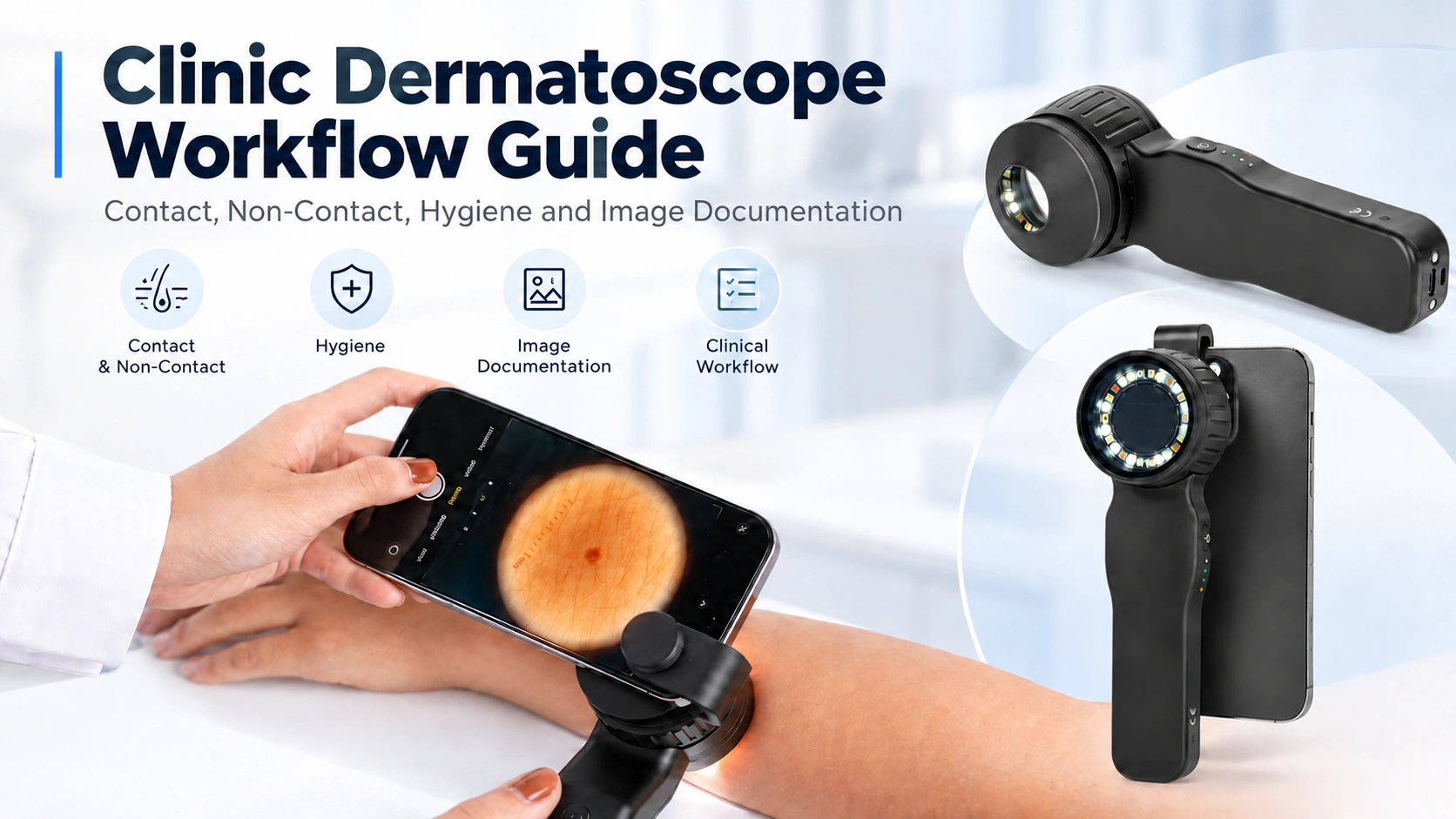
IBOOLO dermatoscopes can generally be divided into two categories: pocket dermatoscopes and handheld dermatoscopes.
Pocket dermatoscopes are compact devices designed mainly for smartphone connection. They are useful for mobile imaging and quick documentation. Because they rely on smartphone integration, they are often suitable for portable use and teledermatology support.
In contrast, the handheld series, which includes the DE-3100 and DE-4100 lines, provides a broader range of functions. In addition to smartphone connectivity for image capture and storage, they also support direct visual examination through the optical lens. This means doctors can examine lesions immediately without depending entirely on a phone screen.
In clinical dermatology, direct observation remains important. During outpatient screening, physicians often need to move quickly between multiple patients and lesions. A handheld device allows faster transitions between visual inspection and image documentation. For this reason, many dermatologists prefer handheld dermatoscopes over smartphone-only pocket models.
How Did the DE-3100 PRO and DE-4100 PRO Expand Their Functions?
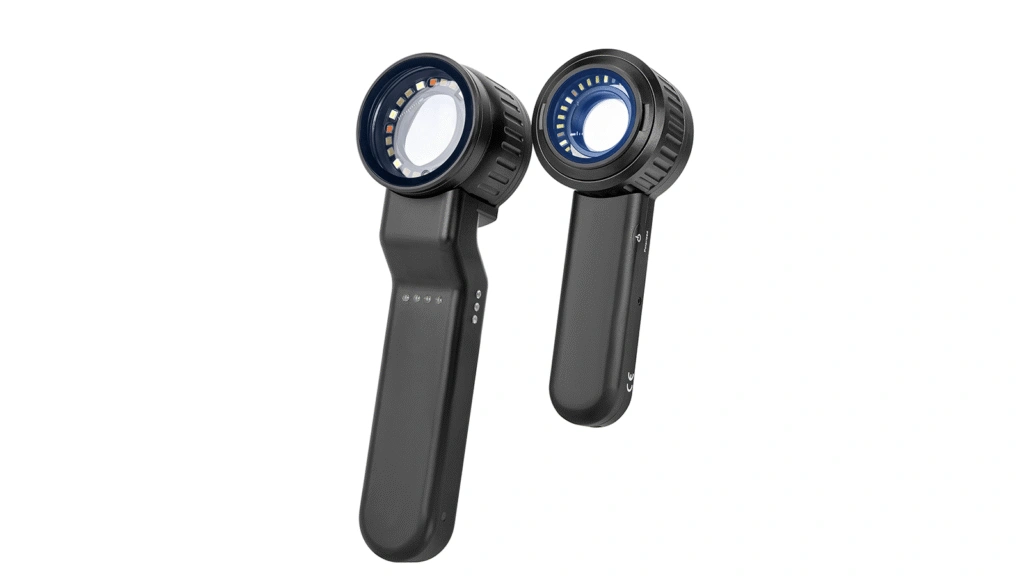
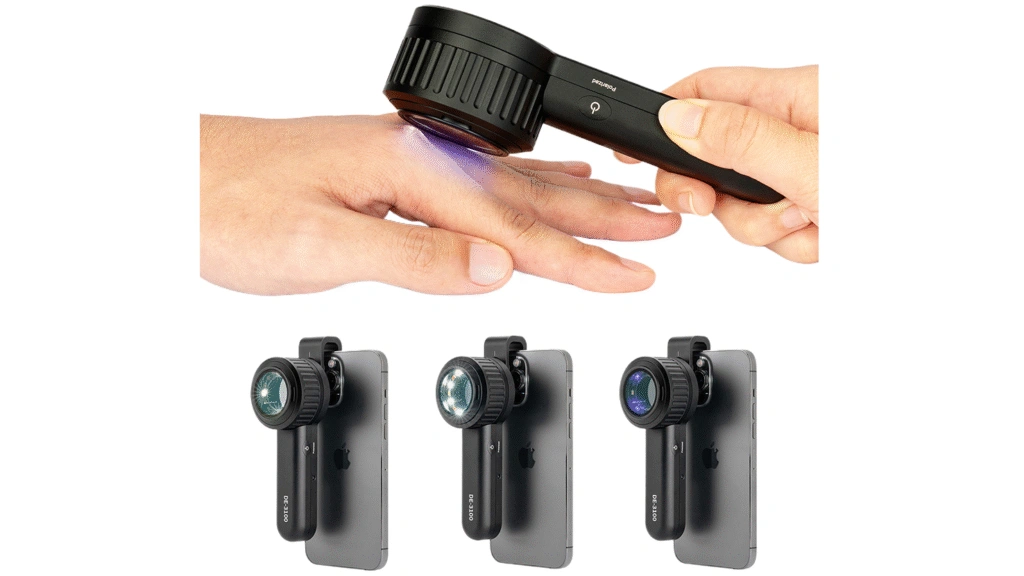
Within the IBOOLO handheld dermatoscope series, the DE-3100 and DE-4100 are two major product lines. Their upgraded versions, the DE-3100 PRO and DE-4100 PRO, introduced UV illumination in addition to standard polarized and non-polarized modes.
UV light has practical clinical value in dermatology. Wood’s lamp examination uses ultraviolet light to help evaluate fungal infections, bacterial infections, pigmentary disorders, and depigmentation conditions such as vitiligo. The addition of UV mode therefore makes both the DE-3100 PRO and DE-4100 PRO more versatile than earlier standard models.
Does the DE-4100 PRO Have Stronger Hardware Specifications?
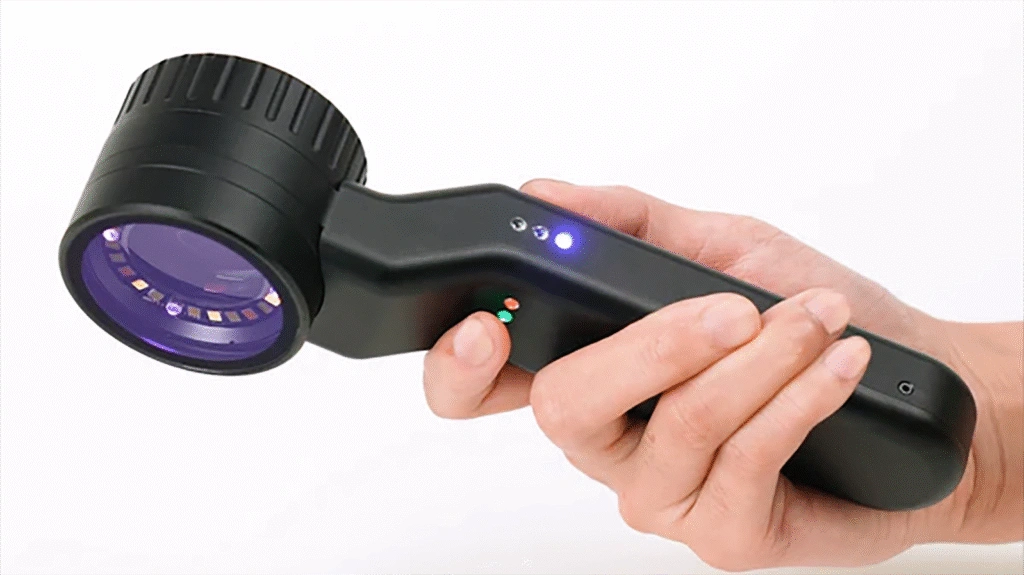
From a hardware perspective, the DE-4100 PRO offers several advantages. First, its viewing area is larger than that of the DE-3100 PRO. A wider field of view can help physicians examine broader skin structures without repositioning the device repeatedly. Second, the DE-4100 PRO includes a larger battery capacity. Its 1500 mAh battery exceeds the 1000 mAh battery used in the DE-3100 PRO. Third, the DE-4100 PRO includes brightness adjustment functionality. Adjustable illumination may improve visibility under different examination conditions and skin types.
On paper, these specifications appear superior. However, clinical preference is not always determined by specifications alone. In real outpatient settings, ergonomics and workflow simplicity often influence physician choices more strongly.
Why Is Weight So Important During Daily Clinical Use?
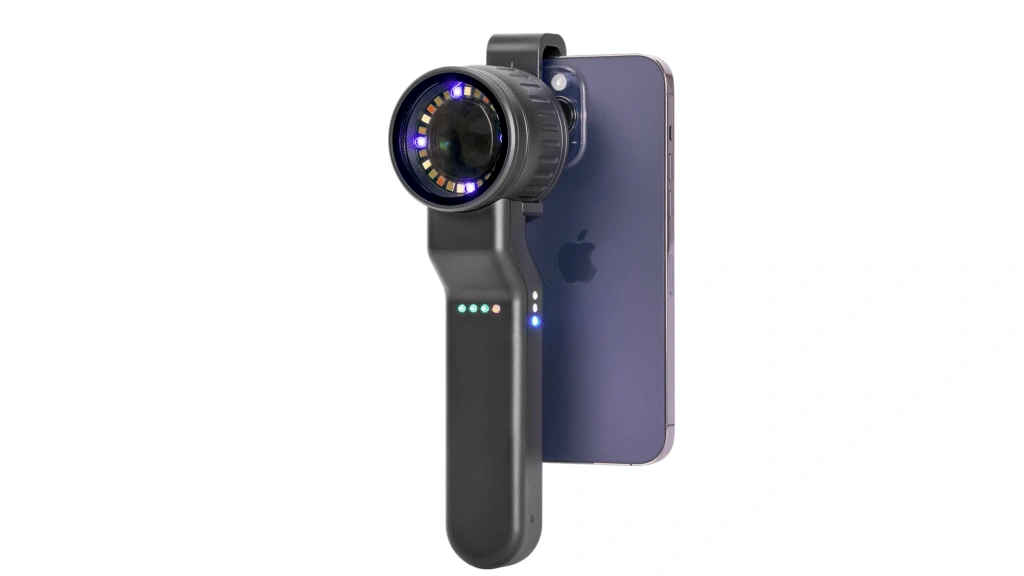
One of the most important reasons doctors prefer the DE-3100 PRO is its lighter weight. The DE-3100 PRO weighs only 187 g, while the DE-4100 PRO weighs approximately 309 g. This difference becomes significant during repeated daily use.
Dermatologists may perform dozens or even hundreds of dermoscopic examinations in a single day. A lighter device reduces hand fatigue during prolonged operation. It also improves handling stability during detailed examination.
Weight becomes even more important when a smartphone is attached to the dermatoscope for image capture. A lighter device is easier to operate with one hand while adjusting focus or positioning the camera. Doctors often value this convenience because it improves examination speed during busy outpatient sessions.
A lighter structure may also improve magnetic smartphone attachment stability. Reduced overall load can make handheld operation feel more balanced and controlled.
How Does Button Design Affect Clinical Efficiency?
Another major reason for the popularity of the DE-3100 PRO is its control system.
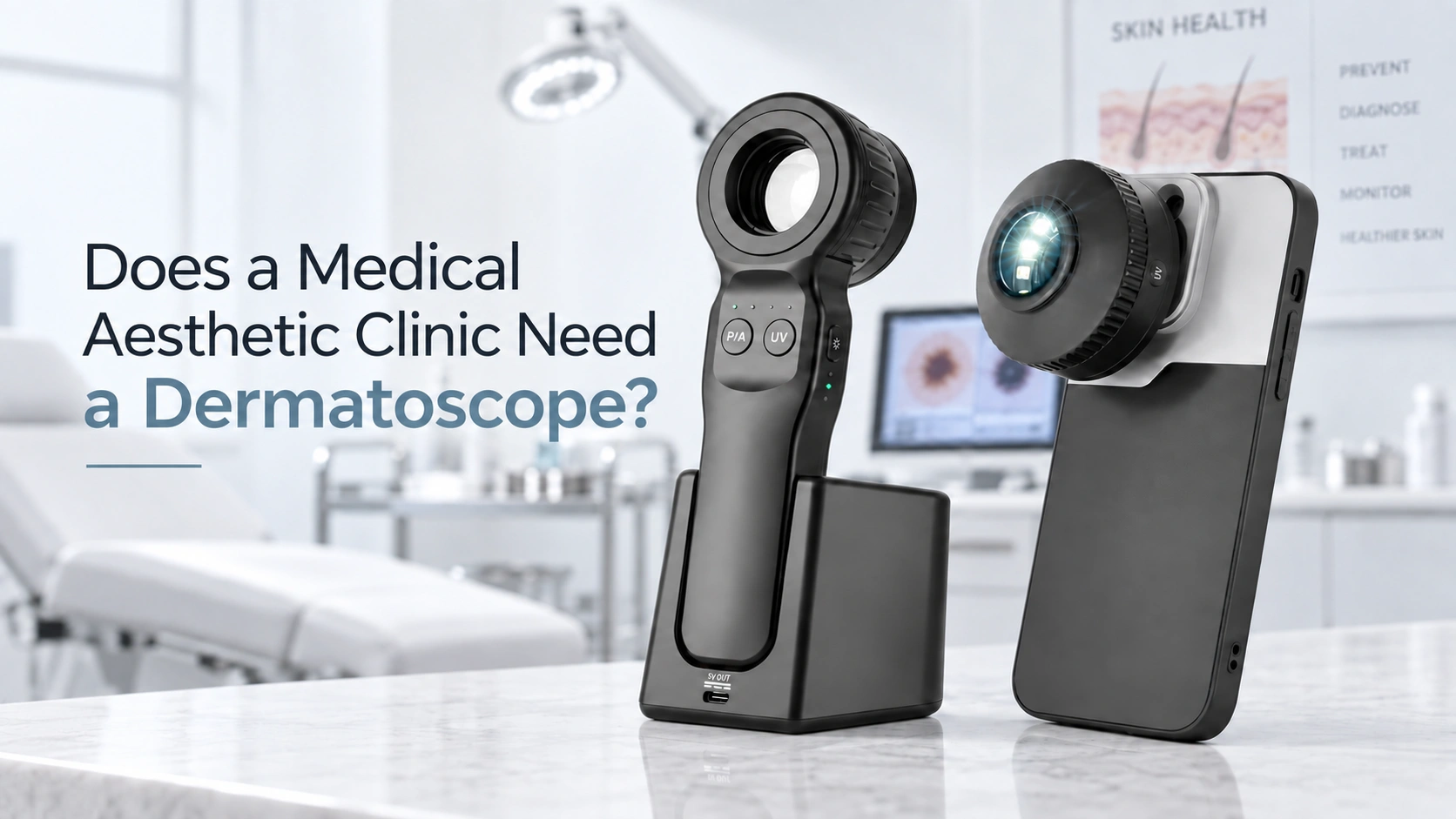
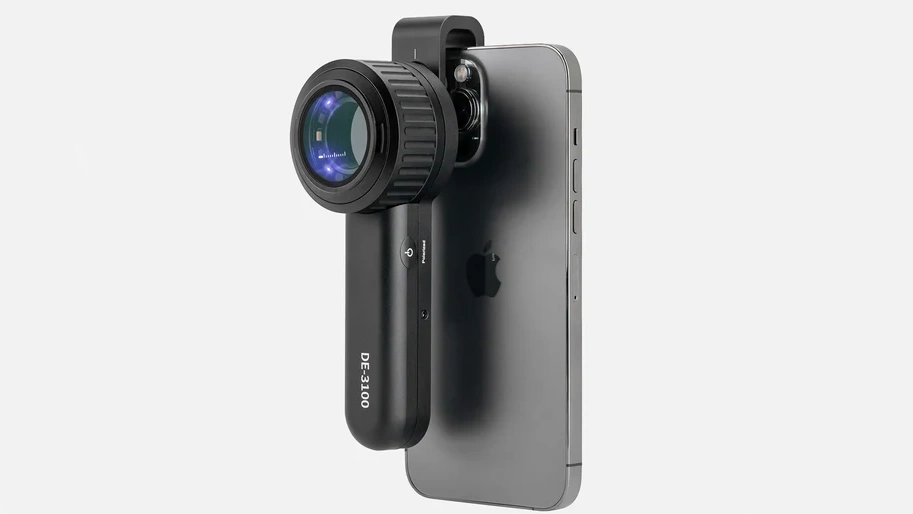
The DE-4100 PRO utilizes a single-button system to cycle through all available modes: polarized light, non-polarized light, white-amber mixed light, and UV light. Although this design integrates several functions into one interface, some doctors feel the switching path is too long for routine examinations.
By comparison, the DE-3100 PRO uses a simpler dual-button design. One button switches directly between polarized and non-polarized modes, while the second button independently controls UV illumination.
This operational difference may appear small, but it has practical importance during rapid clinical screening. Many dermatologists frequently alternate between polarized and non-polarized observation to compare superficial and deeper skin structures quickly. A direct two-mode switch can therefore save time during repeated examinations.
Some clinicians also report that white-amber mixed light is rarely needed in routine daily practice. For these users, cycling through additional modes may interrupt workflow rather than improve it.
Does This Mean the DE-4100 PRO Is Worse Than the DE-3100 PRO?
This article mainly discusses the preferences reported by many users who chose the DE-3100 PRO. The purpose is to provide practical reference information that may help doctors and clinicians select the IBOOLO dermatoscope model that best fits their own clinical habits and workflow more efficiently.
It does not mean that the DE-4100 PRO is inferior to the DE-3100 PRO. The DE-4100 PRO remains the flagship handheld dermatoscope model in the IBOOLO product line. Its larger viewing area, bigger battery capacity, brightness adjustment function, and additional mixed-light mode are still highly valued by many professional users.
Different doctors may have different examination habits, clinical environments, and operational preferences. For some users, the lighter weight and simplified control system of the DE-3100 PRO may provide better efficiency. For others, the broader functionality of the DE-4100 PRO may be more suitable for their clinical needs.
Ultimately, the best dermatoscope is the one that matches the user’s daily practice most effectively.