






Dermoscopy of Psoriasis: Clinical Patterns & Diagnostic Guide | IBOOLO

A deep dive into the dermoscopy of psoriasis. Identify hallmark red-dotted vessels, white scales, and clinical patterns for accurate diagnosis with IBOOLO.

Article

Dermoscopy Applications in the Diagnosis of Psoriasis

Dermoscopy of Psoriasis What is Psoriasis? Psoriasis is a long term skin disease which can grow anywhere but most commonly appear on the elbows, knees, scalp and trunk. Psoriasis is characterized by rash with itchy, scaly patches. It is a painful chronic disease and with no cure, which means that symptoms appear unexpectedly and may…


Clinical Guide: Advancing the Dermoscopy of Psoriasis Diagnosis

In the rapidly evolving field of dermatology, the dermoscopy of psoriasis has transitioned from a niche research tool to a fundamental bedside diagnostic standard. As chronic inflammatory skin diseases often present with overlapping clinical features, the ability to visualize microscopic morphology is crucial. At IBOOLO, we recognize that precision imaging is the cornerstone of early intervention and long-term management of psoriatic patients.

Psoriasis affects approximately 2-3% of the global population. While clinical diagnosis is often based on the presence of erythematous-squamous plaques, atypical presentations—especially in the scalp, nails, and skin folds—require the superior resolution provided by modern dermoscopy of psoriasis protocols.

The Histopathological Correlation in Dermoscopy of Psoriasis

The hallmark features observed during the dermoscopy of psoriasis are direct reflections of underlying histopathological changes. Understanding this correlation is vital for every practicing dermatologist.

  • Regularly Distributed Dotted Vessels: These represent the vertical orientation of dilated and tortuous capillaries within the elongated dermal papillae. In a typical dermoscopy of psoriasis exam, these appear as uniform red dots across the entire lesion.
  • White-Silvery Scales: These are a result of parakeratosis (incomplete maturation of keratinocytes) and orthokeratosis. Under magnification, the scales appear thick, lamellar, and highly reflective.
  • The Light-Red Background: This hue is the result of significant vasodilation and thinning of the suprapapillary epidermis, allowing the dermal vascular plexus to become more visible.

Clinicians often look for the Dermoscopic Auspitz Sign—where the gentle removal of scales reveals pinpoint hemorrhages. This phenomenon is a definitive diagnostic marker found exclusively through high-quality dermoscopy of psoriasis.

Subtype Variations: Navigating Dermoscopy of Psoriasis Patterns

One of the most complex challenges in clinical dermatology is diagnosing psoriasis variants. The dermoscopy of psoriasis provides unique clues for each:

1. Scalp Psoriasis vs. Seborrheic Dermatitis

Distinguishing between these two conditions is notoriously difficult. However, the dermoscopy of psoriasis on the scalp typically reveals "signet ring" vessels and twisted red loops, whereas seborrheic dermatitis shows more arborizing (branch-like) vessels and greasy, yellowish scales.

2. Nail Psoriasis and the Hyponychium

Nail involvement occurs in up to 50% of patients. Through the dermoscopy of psoriasis in nails, we can observe "pitting" (irregular depressions), splinter hemorrhages, and dilated capillaries at the hyponychium, which are often the earliest signs of psoriatic arthritis.

3. Palmoplantar Psoriasis

Due to the thick stratum corneum on the palms and soles, dotted vessels may be less apparent. The dermoscopy of psoriasis in these areas focuses on white scales following skin furrows and "beaded" vascular patterns.

4. Inverse and Guttate Psoriasis

Inverse psoriasis (found in skin folds) often lacks the characteristic scaling but maintains a bright red background with regular dotted vessels. Guttate psoriasis, often triggered by streptococcal infections, displays a more subtle but still symmetrical vascular distribution during a dermoscopy of psoriasis screening.

Differential Diagnosis: Clinical Accuracy in Dermoscopy

To avoid misdiagnosis and unnecessary biopsies, clinicians must master the differential diagnostic features. The following table highlights why the dermoscopy of psoriasis is the superior diagnostic method.

Condition Primary Vascular Pattern Scale Morphology Background Color
Psoriasis Regular Red-Dotted / Glomerular Thick, Silvery-White Light Red / Salmon Pink
Nummular Eczema Irregular Dotted Vessels Yellow Crusts / Serous Exudate Dull Red / Yellowish
Lichen Planus Wickham Striae / Linear Vessels Absent or Minimal Violaceous (Purple)
Pityriasis Rosea Peripheral Dotted Vessels Collarette (Peripheral) Scaling Pale Pink

Optimizing Outcomes with Precision Optics

The effectiveness of the dermoscopy of psoriasis is highly dependent on the quality of the optical lens and lighting. For clinicians, the ability to switch between polarized and non-polarized modes is essential.

Polarization in Psoriasis Diagnosis:Using a polarized dermatoscope like the IBOOLO DE-4100 Pro allows for a deeper view into the dermis without the need for interface fluids. This is particularly useful for visualizing the "dotted vessels" that are the hallmark of dermoscopy of psoriasis.

Furthermore, our smartphone-integrated systems allow for Digital Dermoscopic Monitoring. Clinicians can capture 4K images of psoriatic plaques, providing a quantifiable baseline to measure the efficacy of biologics, phototherapy, or topical steroids. This "dermoscopic healing" often precedes clinical clearance, offering a predictive window for treatment success.

Frequently Asked Questions about Dermoscopy of Psoriasis

Q: Can dermoscopy differentiate psoriasis from mycosis fungoides?
A: Yes. While dermoscopy of psoriasis shows regular dots, mycosis fungoides typically displays fine short linear vessels and a "spermatozoa-like" vascular pattern.

Q: Is dermoscopy necessary for every psoriasis patient?
A: While not always mandatory for clear-cut cases, the dermoscopy of psoriasis is invaluable for atypical presentations, nail involvement, and monitoring therapeutic response to expensive biologics.

Expert Medical Review: This clinical guide on the dermoscopy of psoriasis is curated by the IBOOLO Optical Engineering & Medical Advisory Team.
References: 1. Lallas A, et al. "Dermoscopic patterns of common inflammatory skin diseases." JAAD, 2013. 2. Errichetti E, "Dermoscopy in monitoring the response to therapy in psoriasis." Psoriasis: Targets and Therapy, 2018.


Recommended reading

365nm UV Lamp for enhanced visualization in dermatology - IBOOLO

IBOOLO 12W 365nm UV lamp delivers optimized illumination for diagnosing bacterial, and fungal infections and skin pigment disorders and enhances visualization of skin conditions like tinea capitis.

Support Center – IBOOLO

Shenzhen Iboolo Optics Co.Ltd founded in 2012,is located in the beautiful city of Shenzhen, Guangdong. Our main products including Woods Lamp, Macro lens, Microscope and Dermatoscope, etc.

China Suppliers & Wholesalers Creates Professional Best Dermatoscopes for Buyers - IBOOLO

As a premier best dermatoscope suppliers & wholesalers in China, we offer Professional UV lamps designed and built to your specifications. Our flexible suppliers & wholesalers allows for tailored solutions.

Dermoscopy of Psoriasis

What is Psoriasis?

Psoriasis is a long term skin disease which can grow anywhere but most commonly appear on the elbows, knees, scalp and trunk. Psoriasis is characterized by rash with itchy, scaly patches.

It is a painful chronic disease and with no cure, which means that symptoms appear unexpectedly and may go throughout the whole life. It trends to go through a cycle where it flares for a few weeks or months and then subsides for a while.The condition interferes with sleep and concentration and also varies in severity.
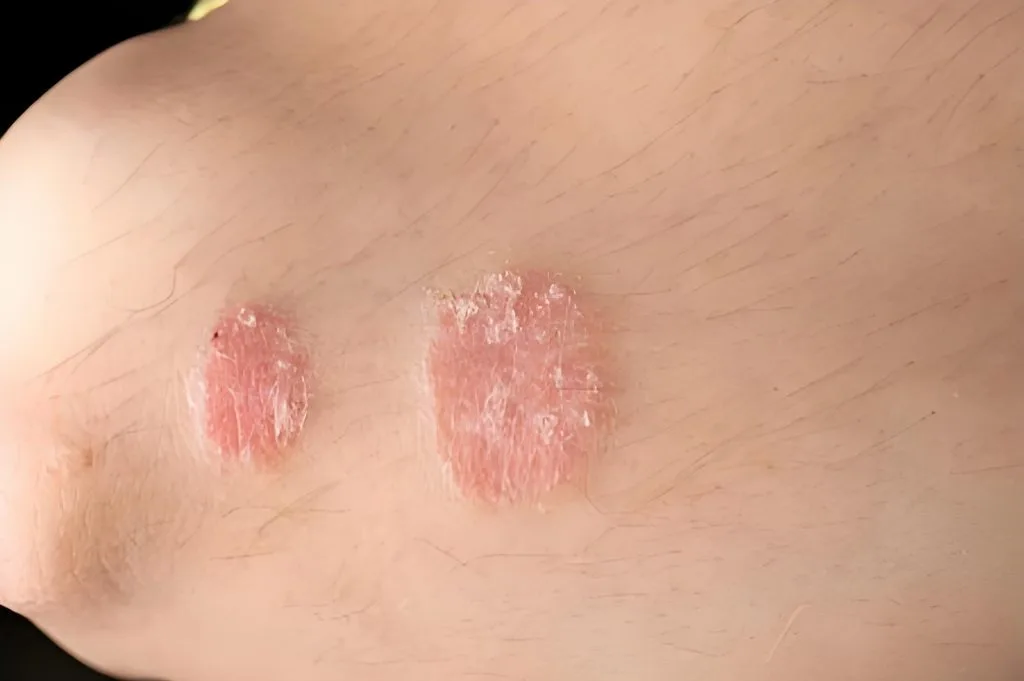
How does dermoscopy detect and diagnose the types of psoriasis skin disease?

Dermoscopy, also known as dermatoscopy, is a non-invasive tool aiding dermatologists to clearly observe skin lesions which are invisible to the naked eye. To help to diagnose psoriasis, dermoscopy can reveal specific patterns and features of it. The characteristics of dermoscopy of psoriasis as below:

• Dotted vessels: Dotted vessels are the most common dermoscopic features inspected in psoriasis. They show as tiny dots within the psoriatic plaques. If dermscope detect any other morphologic type of vessels, then it can exclude the psoriasis diagnosis.
• Red globules: Sometimes called dots or balls, they correspond to vertically arranged rings of blood vessels within slender dermal papillae. They may differ in diameter, but are usually of similar size within a given lesion.
• Uniform distribution: These vessels at the lesion site showing as symmetrical and uniform distribution is a landmark of psoriatic plaques.
• Removing scales: Removing scales can display tiny red blood drops and reveal the characteristic vascular pattern of psoriasis, called as the dermoscopic” Auspitz” sign.
• Red globular rings: Although red globular rings are rare, but for psoriasis, it is a high specification that circles or rings of red balls present irregularly.

During treatment, dermalogists also can monitor the processing or the transformation of psoriatic plaques with the aid of dermoscope. Thus dermoscopy of psoriasis can provide extra morphological information which may be very useful for early examination of relapse.
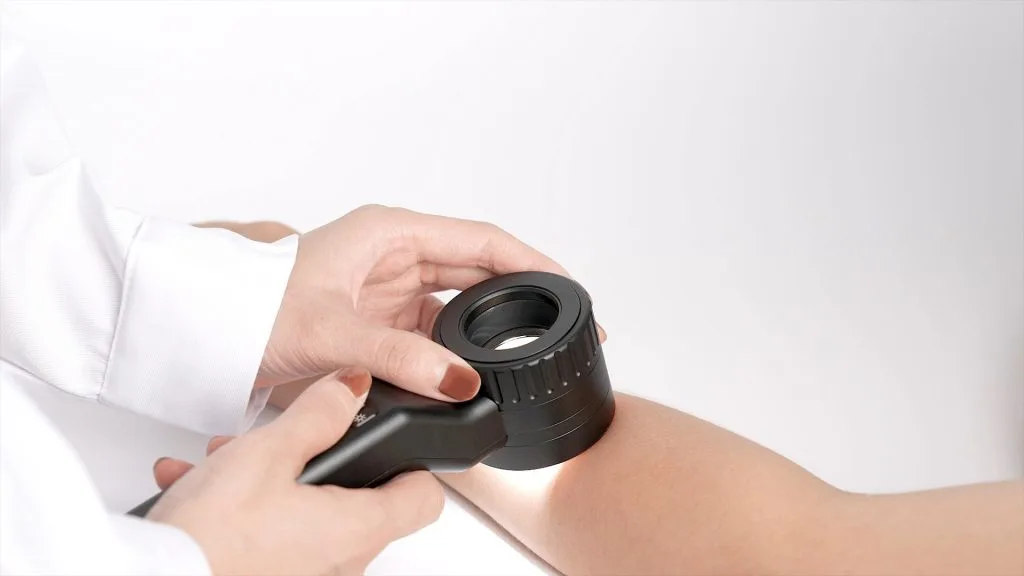
Dermatoscope DE-4100

How distinguish between psoriasis and eczema under dermoscope?

When using a dermoscope to distinguish between psoriasis and eczema, there are some main characteristics for consideration as below:

Color
Variation: Under dermoscope, psoriatic plaques exhibit a uniform salmon pink color.
Eczema: Eczematous lesions tend to have more various colors, red, yellow, blue or brown are included. These color may change according to the stage of inflammation.

Vascular Patterns:
Psoriasis : Under dermoscopy, psoriasis lesions usually present glomerular blood vessels or regular punctal blood vessel, which is also called “strawberry pattern” ). Most of these vessels are evenly distributed within the lesion part.
Eczema: Eczematous lesions often exhibit more sparse and irregular blood vessels. often showing a linear or linear irregular pattern. These vessels can be less obvious than in psoriasis.

Micro-Hemorrhages:
Psoriasis: Look for pinpoint red dots (micro-hemorrhages) within psoriatic plaques. These dots represent dilated capillaries and are characteristic of psoriasis. Look for tiny red spots (micro-bleeds) in patches of psoriasis. These dots means angiotelectasis, a characteristic of psoriasis.
Eczema: In eczema lesions, micro-hemorrhages are infrequent.

Scale and Crusts:
Psoriasis:Under dermoscope, psoriatic patches usually have silver and white scales with shiny looks.These scales characters thickness and adhesion.
Eczema: Eczematous lesions may appear tiny white scales, and they are less obvious than psoriasis. In addition, eczema lesions may scab due to exudation or scratches.

Distribution and Symmetry:
Psoriasis:Psoriasis patches are usually symmetrically distributed on the surface of the extensor muscles ( knees, elbows, scalp, lower back).
Eczema: Eczema lesions can occur in any part of the body and they are asymmetrical. They may be more common in curved areas (behind the knee,inside the elbow).

There are many key features to distinguish between psoriasis and eczema. Dermoscopy of psoriasis and eczema both can help to enhance the visual field for these skin conditions more closely. So that the dermatologist can make a accurate diagnosis combining dermoscope with clinical experience.

Is dermoscope the main tool for psoriasis diagnosis?

Yes, dermoscope is one of the valuable main tool for psoriasis diagnosis. Dermoscope plays a important role in the process of diagnosing psoriasis. But it is not the sole device for diagnosing psoriasis. There are other devices for helping to diagnose psoriasis more accurate and comprehensive, such as Wood’s Lamp Examination, Laboratory Tests, and Psoriasis Area and Severity Index (PASI).

Other Tools:
Wood’s Lamp Examination: Wood’s lamp can highlight psoriatic plaques by ultra violet examination because of increased fluorescence.
Laboratory Tests: Blood tests (such as C-reactive protein and erythrocyte sedimentation rate) may provide supporting evidence.Serum markers for autoimmune activity and inflammation are included.
Psoriasis Area and Severity Index (PASI): Based on lesion characteristics, such as the degree of skin severity, the intensity of erythema, scale, and thickness, the PASI assesses the severity of psoriasis.

Additionally, Dermatologists evaluate the patient’s skin by their history, clinical symptoms. Even when it is necessary, a skin biopsy is need to be performed.
While dermoscopy supplies clearly wide visual, a comprehensive approach and other tools are needed to ensures accurate psoriasis diagnosis.
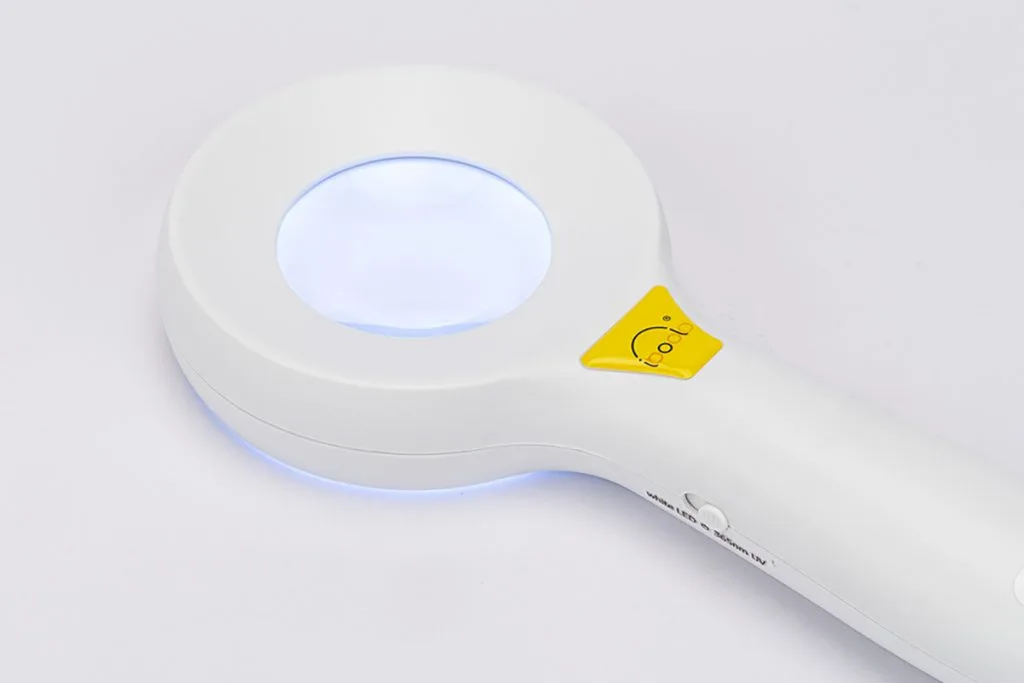
Dermatoscope DE-215 Woods lamp

What is the clinical value of dermoscopy in psoriasis?

Dermoscopy a noninvasive device contributing to important clinical value in the evaluation and management of psoriasis. There are some key clinical values for dermoscopy of psoriasis as below:

Psoriasis diagnosis
Identification of Psoriasis: Dermoscopy helps to identify typical features of psoriasis, like regular punctate blood vessels within the erythema plaques.
Timely diagnosis: Dermoscope aids dermologists to diagnose and interfere in timely, and improve the treatment outcome of patients.

Monitoring Disease Progression:
Objective Assessment: Dermoscopy is used to monitor changes in psoriasis over time, and it provides an objective way to assess the severity of psoriasis.
Quantifying Lesions: With using dermoscope, dermatologists can measure the extent of involvement, scaling and erythema of psoriasis.
Treatment Feedback: Dermoscope can monitor precisely the feedback to treatment, even including good fedback, bad feedback and side effect.

Reducing Biopsy Need:
Noninvasive Approach: Dermoscopy greatly reduce the unnecessary biopsies for skin.
Avoiding Invasiveness: Using a dermoscope to examine skin is a invasive and painless process which still can get an accurate diagnosis.

Guiding Treatment Decisions: Targeted Therapies: Under dermoscopy, clinician can choose reasonable treatment therapeutic scheme. Dermoscope is a guider for treatment decisions.

The findings of dermoscopy provide complement information for clinical evaluation. So that clinician can make more proper treatment decisions for psoriasis. Deroscopy of psoriasis is a great significance in examination and management of psoriasis.
Share this article

0

No products in the cart.

Ask

Have questions on gear or your order?

Our Gear Guides are here to help! Get personal advice from pro creatives

Name
Subject
Email address
How can we help?
Answers

Instant Answers

How can dermoscopy images be captured?

Dermoscopy images can be captured and stored in different ways, such as: • Using a smartphone or tablet with dermoscopic adapter, which consisted in the package.• Using a digital camera

Dermoscopy images can be captured and stored in different ways, such as:

• Using a smartphone or tablet with dermoscopic adapter, which consisted in the package.
• Using a digital camera with dermoscopic adapter, there’s 49mm screw size camera adapter available to order now.

Compatible phone/tablet models:
All iPhone models, 95% Android phones, 90% tablet. For phone/tablet size in 5.25-14mm

Compatible camera models:
All camera with built 49mm filter screw, such as Canon EOS 70D, 80D, 90D; Canon EOS R7, R10, R50, R100; Canon M100, M200, M50, Mark II; Canon G7X Mark III, Sony ZV-1

How can I connect my phone to my dermatoscope?

There’s universal phone adapter for all our dermoscopes. Please check the installation procedure bellow or watch operation guide. Smartphone Connector (1) Place phone adapter screw in the center of smartphone’s

There’s universal phone adapter for all our dermoscopes. Please check the installation procedure bellow or watch operation guide.

Smartphone Connector

(1) Place phone adapter screw in the center of smartphone’s main camera.
(2) Screw magnet attachment on phone adapter.
(3) Put dermoscope’s back ring and magnet attachment together

Take The Best Images

You need to adjust the focus ring after the dermoscpe connected on smartphone to get the best images.

How can I clean my dermoscopy after usage?

Cleaning your dermoscopy after usage is important to prevent cross-contamination and infection. The cleaning method may vary depending on the type and model of your dermoscopy, so you should always

Cleaning your dermoscopy after usage is important to prevent cross-contamination and infection. The cleaning method may vary depending on the type and model of your dermoscopy, so you should always follow the manufacturer’s instructions. However, some general steps are:

• Turn off and disconnect your dermoscopy from any power source or device.

• Wipe off any visible dirt or debris from the dermoscopy with a soft cloth or tissue.

• Disinfect the dermoscopy with an alcohol-based wipe or spray, or a disinfectant solution recommended by the manufacturer. Make sure to cover all surfaces, especially the lens and contact plate.

• Let the dermoscopy air dry completely before storing it in a clean and dry place.

• Do not use abrasive or corrosive cleaners, solvents, or detergents that may damage the dermoscopy.

• Do not immerse the dermoscopy in water or any liquid, unless it is waterproof and designed for immersion.

You should clean your dermoscopy after each use, or at least once a day if you use it frequently. You should also check your dermoscopy regularly for any signs of damage or malfunction, and contact the manufacturer or service provider if needed.

Polarized VS Non-polarized Dermoscopy

A dermoscopy is a device that allows the examination of skin lesions with magnificationand illumination. By revealing subsurface structures and patterns that are not visible tothe naked eye. It can

A dermoscopy is a device that allows the examination of skin lesions with magnificationand illumination. By revealing subsurface structures and patterns that are not visible tothe naked eye. It can improve the diagnose accuracy of skin lesions, such as melanoma,basal cell carcinoma, seborrheic keratosis, etc.

There are two main types of dermoscopy: Non polarized and polarized dermoscopy.We’ve fitted most of our dermoscopys with polarized and non-polarized light. They canbe used in multiple skin structures.

Non-polarized contact Mode

In non-polarized mode, the instrument can provide information about the superficialskin structures, such as milia-like cysts, comedo-like openings, and pigment in theepidemis.

The dermoscopy requires applying a liquid such as mineral oil or alcohol to the skin andplacing the lens in contact with the skin. This reduces surface reflection and enhancesthe view of subsurface structures.

Image with non-polarized light (DE-3100)

Polarized contact Mode

In polarized mode, the instrument allows for visualization for deeper skin structures,such as blood vessels, collagen, and pigment in the dermis.

The dermoscopy does not need to be in contact with the skin or use any liquid. Theirpolarized light can help to eliminate surface reflection and allow visualization ofvascular structures.

Image with polarized light (DE-3100)

Polarized non-contact Mode

The dermoscopy can also use polarized light to examine the skin without direct contact.

In polarized non-contact mode, the instrument allows for examination infected areasand lesions that are painful for the patient, or the difficult to contact pigmented lesions,such as nails and narrow areas.

The contact plate should be removed in this mode, and it does not require applying aliquid to the skin. As it doesn’t require pressure or fluid application on the skin, it canalso avoid cross-contamination and infection risk.

Image in polarized non-contact mode (DE-3100)

How effectiveness is dermoscopy

Compared with visual inspection, the dermoscopy can be used to capture and store skin lesion photos, which play an important role in early skin cancer examination. The dermoscopy allows the

Compared with visual inspection, the dermoscopy can be used to capture and store skin lesion photos, which play an important role in early skin cancer examination.

The dermoscopy allows the examination of skin lesions with magnification and illumination. This can be greatly avoiding the factors that cause interference to visual detection. Such as lighting, skin color, hair and cosmetics.

Several studies have demonstrated that dermoscopy is useful in the identification of melanoma, when used by a trained professional.

It may improve the accuracy of clinical diagnosis by up to 35%
It may reduce the number of harmless lesions that are removed
In primary care, it may increase the referral of more worrisome lesions and reduce the referral of more trivial ones

A 2018 Cochrane meta-analysis published the accuracy of dermoscopy in the detection.

Table 1. Accuracy of dermoscopy in the detection of melanoma in adults
Detection Method Sensitivity, % Specificity, % Positive Likelihood Ratio NegativeLikelihood Ratio
Visual inspection alone (in person) 76 75 3.04 0.32
Dermoscopy with visual inspection (in person) 92 95 18 0.08
Image-based visual inspection alone (not in person) 47 42 0.81 1.3
Dermoscopy with image-based visual inspection (not in person) 81 82 4.5 0.23
ROC—receiver operating characteristic. *Estimated sensitivity calculated on the summary ROC curve at a fixed specificity of 80%.

As we can see, the dermoscope can improve the accuracy of diagnosis of skin lesions, especially melanoma.

Table 1. Accuracy of dermoscopy in the detection of melanoma in adults
Detection Method Sensitivity, % Specificity, % Positive Likelihood Ratio NegativeLikelihood Ratio
Visual inspection alone (in person) 79 77 3.4 0.27
Dermoscopy with visual inspection (in person) 93 99 93 0.07
Image-based visual inspection alone (not in person) 85 87 6.5 0.17
Dermoscopy with image-based visual inspection (not in person) 93 96 23 0.07
ROC—receiver operating characteristic. *Estimated sensitivity calculated on the summary ROC curve at a fixed specificity of 80%.

Characteristics of the dermatoscopic structure of the skin lesions include:

• Symmetry or asymmetry
• Homogeny/uniformity (sameness) or heterogeny (structural differences across the lesion)
• Distribution of pigment: brown lines, dots, clods and structureless areas
• Skin surface keratin: small white cysts, crypts, fissures
• Vascular morphology and pattern: regular or irregular
• Border of the lesion: fading, sharply cut off or radial streaks
• Presence of ulceration

There are specific dermoscopic patterns that aid in the diagnosis of the following pigmented skin lesions:

• Melanoma
• Moles (benign melanocytic naevus)
• Freckles (lentigos)
• Atypical naevi
• Blue naevi
• Seborrhoeic keratosis
• Pigmented basal cell carcinoma
• Haemangioma

We use cookies on this website to provide a better user experience. By continuing to browse the website, you are giving your consent to receive cookies on this site. For more details please read our Privacy Policy.

Hot Search Terms