








Article
What Skin Conditions Are Most Common in the Spring?
Spring represents a period of rapid environmental change. Temperature rises, humidity increases, sunlight exposure becomes longer, and airborne allergens such as pollen and mold spores reach their annual peak. These factors collectively influence skin barrier integrity, immune reactivity, and inflammatory responses. Spring is notable for inflammatory and immune-mediated dermatoses. Among the most frequently encountered are…
Spring represents a period of rapid environmental change. Temperature rises, humidity increases, sunlight exposure becomes longer, and airborne allergens such as pollen and mold spores reach their annual peak. These factors collectively influence skin barrier integrity, immune reactivity, and inflammatory responses. Spring is notable for inflammatory and immune-mediated dermatoses. Among the most frequently encountered are allergic contact dermatitis, urticaria, and pityriasis rosea.
Why Is Allergic Contact Dermatitis Frequent in Spring?
Allergic contact dermatitis is an inflammatory skin reaction caused by delayed hypersensitivity to external allergens. Spring increases exposure to both natural and artificial sensitizers. Plants release pollen and other allergenic substances, and outdoor activities become more frequent, increasing skin contact with grasses, leaves, and soil.
Clinically, allergic contact dermatitis presents with erythema, edema, and itching at sites of exposure. Acute lesions may show vesicles or oozing, while subacute and chronic stages are characterized by scaling and lichenification. The distribution pattern is often a key clue, as lesions usually correspond to areas of direct contact. The condition reflects an immune response mediated by sensitized T lymphocytes, which explains why symptoms may appear hours to days after exposure rather than immediately.
How Does Urticaria Become More Common in Spring?
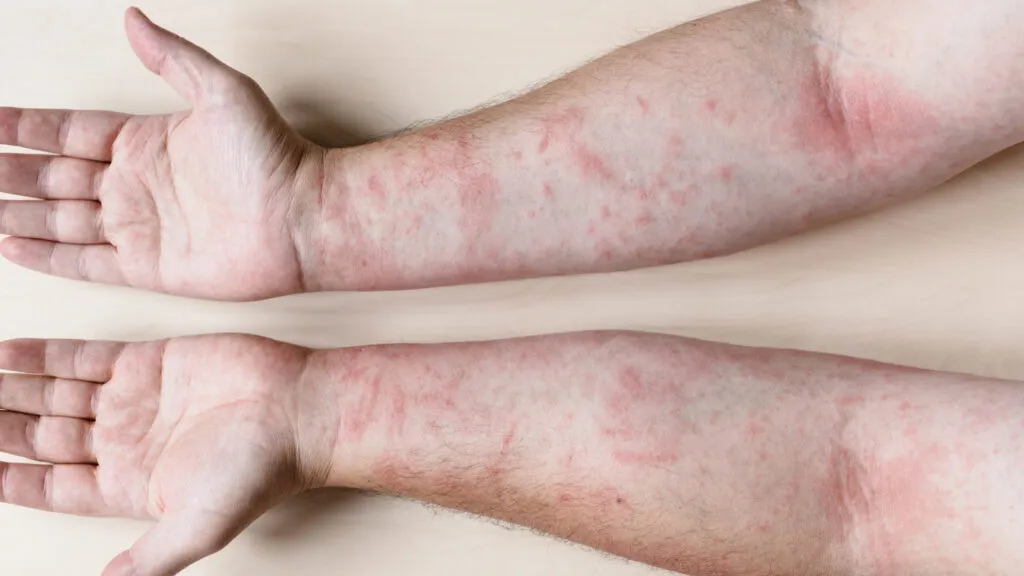
Urticaria is defined by the sudden appearance of wheals accompanied by itching or burning sensations. Each lesion is transient, typically resolving within 24 hours without residual skin changes. Springtime urticaria is often acute and triggered by environmental allergens, respiratory infections, or sudden temperature fluctuations.
During spring, pollen exposure increases significantly and may act as either a direct trigger or a cofactor that lowers the threshold for mast cell activation. Viral infections, which remain common during early spring, also contribute, especially in children and young adults. Unlike allergic contact dermatitis, urticaria affects the deeper dermis and does not involve epidermal damage, which explains the absence of scaling or crusting.
What Is Pityriasis Rosea and Why Does It Peak in Spring?
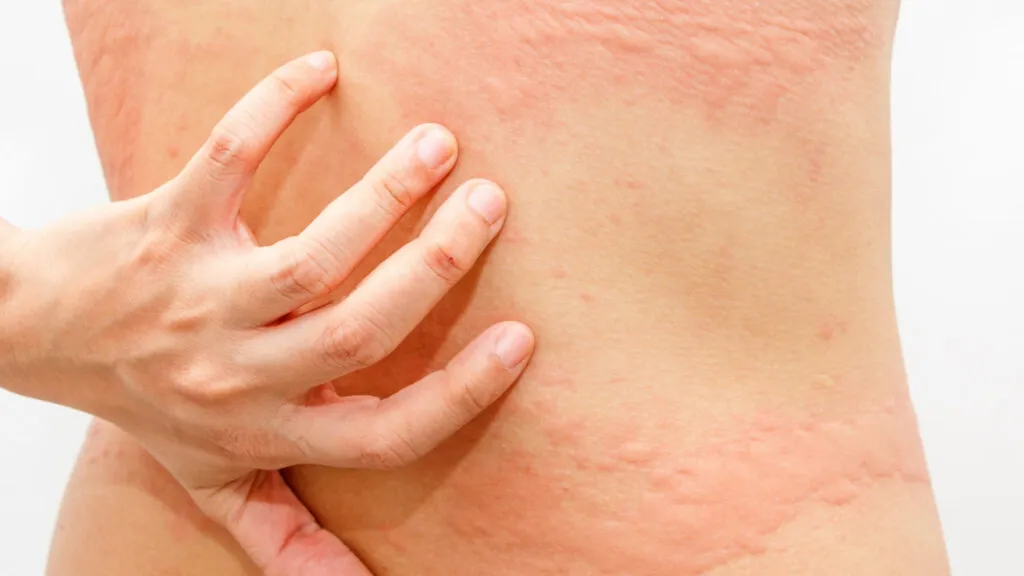
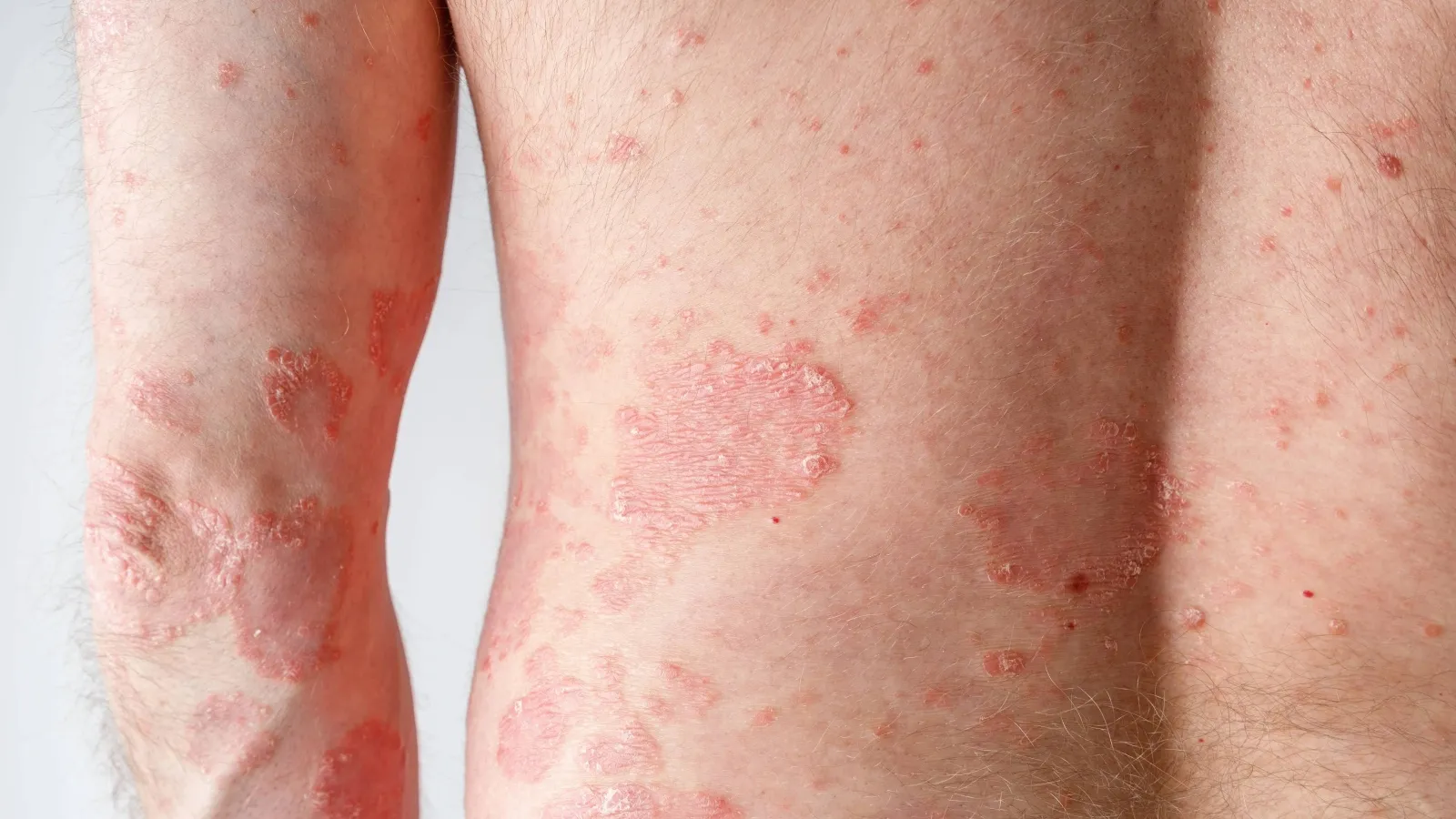
Pityriasis rosea is an acute, self-limited inflammatory skin disorder that primarily affects adolescents and young adults. It often begins with a single oval plaque, known as the herald patch, followed days or weeks later by multiple smaller lesions. These secondary lesions typically align along skin cleavage lines, creating a characteristic distribution on the trunk.
The condition shows seasonal clustering, with increased incidence in spring. Although the exact cause remains uncertain, immune responses to viral reactivation are considered an important factor. Patients may experience mild itching, but systemic symptoms are usually absent or minimal.
How Can Dermoscopy Assist in Differentiating Spring Dermatoses?
Dermoscopy allows visualization of vascular patterns, scaling, and background coloration beneath the skin surface. When using a dermatoscope such as IBOOLO, clinicians can identify features that correlate with underlying pathology and support clinical impressions.
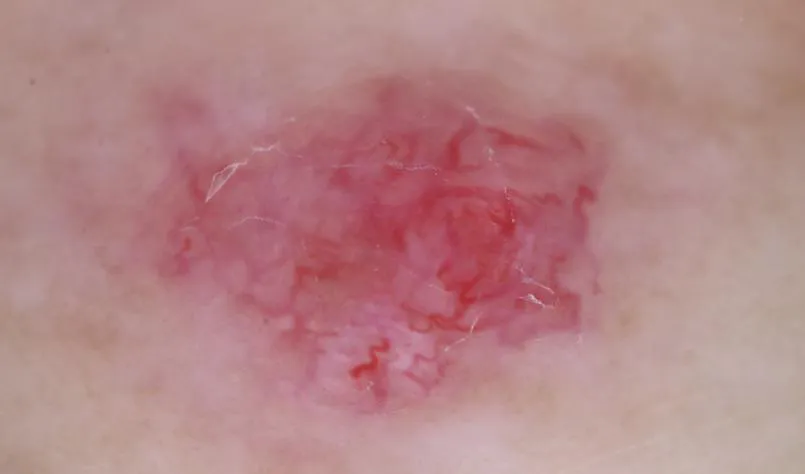
In allergic contact dermatitis, dermoscopy commonly reveals a red or pink background with irregular dotted vessels and yellowish crusts in acute lesions. These findings correspond to epidermal inflammation and exudation. In subacute stages, white scales become more prominent.
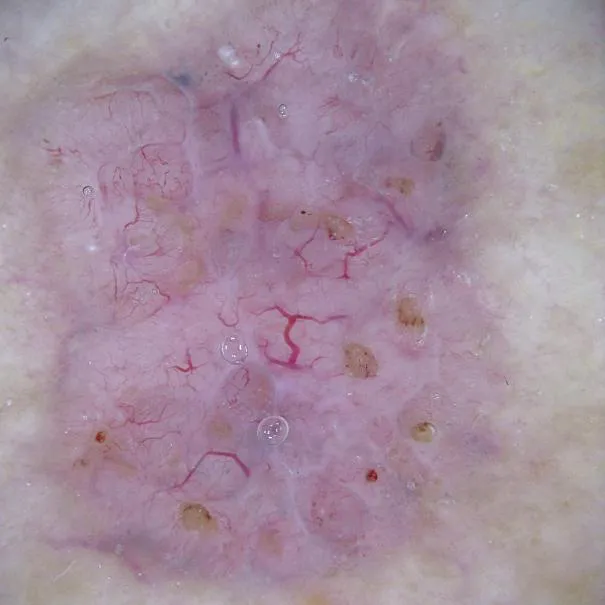
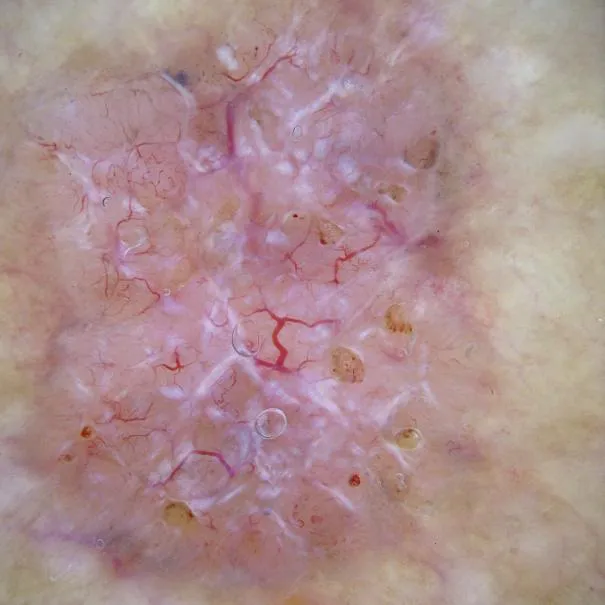
Urticaria shows a different dermoscopic appearance. The background is usually pale pink or reddish, with poorly defined linear or reticular vessels. Dermal edema leads to blurring of vascular structures, and scaling is absent. Because lesions are transient, dermoscopic findings may change rapidly.
Pityriasis rosea demonstrates more characteristic patterns. Dermoscopy often shows peripheral white scaling forming a collarette, with a yellowish or light brown center. Fine dotted vessels may be scattered within the lesion. These features help distinguish pityriasis rosea from eczema or superficial fungal infections.
Which IBOOLO Dermatoscope Is Most Highly Recommended?
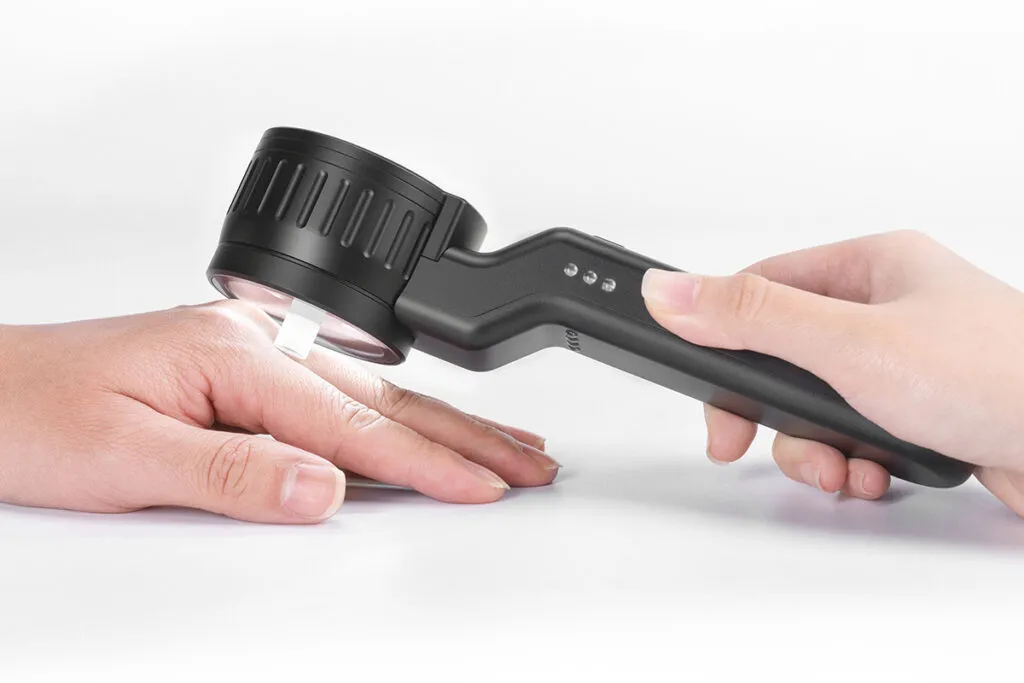
The IBOOLO DE-4100 PRO is currently the most comprehensive dermatoscope introduced by IBOOLO, offering a wide range of powerful features. It is equipped with four illumination modes—polarized light, non-polarized light, amber polarized light, and UV light—allowing observation of all types of skin lesions. In addition, it provides three levels of adjustable brightness and achieves 10X magnification. The device can be connected to a smartphone for real-time viewing and image storage, and it also supports direct handheld use for naked-eye observation by aligning the device with the skin.
How Can Springtime Skin Conditions Be Prevented and Managed?
Springtime skin conditions can be both prevented and effectively managed through a combination of environmental awareness, lifestyle measures, and appropriate medical care. First, minimizing exposure to known triggers—especially airborne allergens like pollen and environmental irritants—is essential. Practical steps include checking local pollen forecasts and limiting outdoor activities when pollen counts are high, washing off pollen and other allergens promptly after outdoor exposure, and avoiding hanging laundry outside where allergens can settle on clothing and bedding.
Protective skincare routines are also important: gentle cleansing to remove potential irritants, regular use of moisturizers to support the skin barrier, and broad-spectrum sun protection help maintain skin resilience. For individuals with a history of allergic or inflammatory conditions, early management with antihistamines or prescription topicals may reduce the severity of seasonal flares.