




Article
Dermatoscope: The Third Eye of Skin Doctors. Then What is A Dermatoscope and Dermoscopy Meaning?
What is a dermatoscope ? Dermatoscope (Dermoscopy) is a handheld optical device usually used to examine skin or hair much more accurately. It combines high quality magnify lens and powerful lighting system to enhance the view of deeper skin. Without any side effective or adverse reactions, also avoiding unnecessary biopsies and surgeries, it is very…
Understanding Dermoscopy: Dermoscopi Meaning, Technology, and Clinical Applications
Dermoscopy Meaning: Dermoscopy (also known as dermatoscopy or epiluminescence microscopy) is a non-invasive, diagnostic imaging technique used by medical professionals to examine skin lesions under high magnification and controlled illumination. By utilizing a handheld device called a dermatoscope, clinicians can observe subsurface structures and patterns invisible to the naked eye, bridging the gap between clinical examination and histopathology.
In modern dermatology, the dermatoscope—occasionally referred to in various regions by the variant spelling dermoscopi—has become as indispensable as the stethoscope is to a cardiologist. This guide explores the technology behind this "third eye" of skin doctors and why it is the gold standard for skin cancer surveillance.
What is a Dermatoscope? The Technology of Visualization
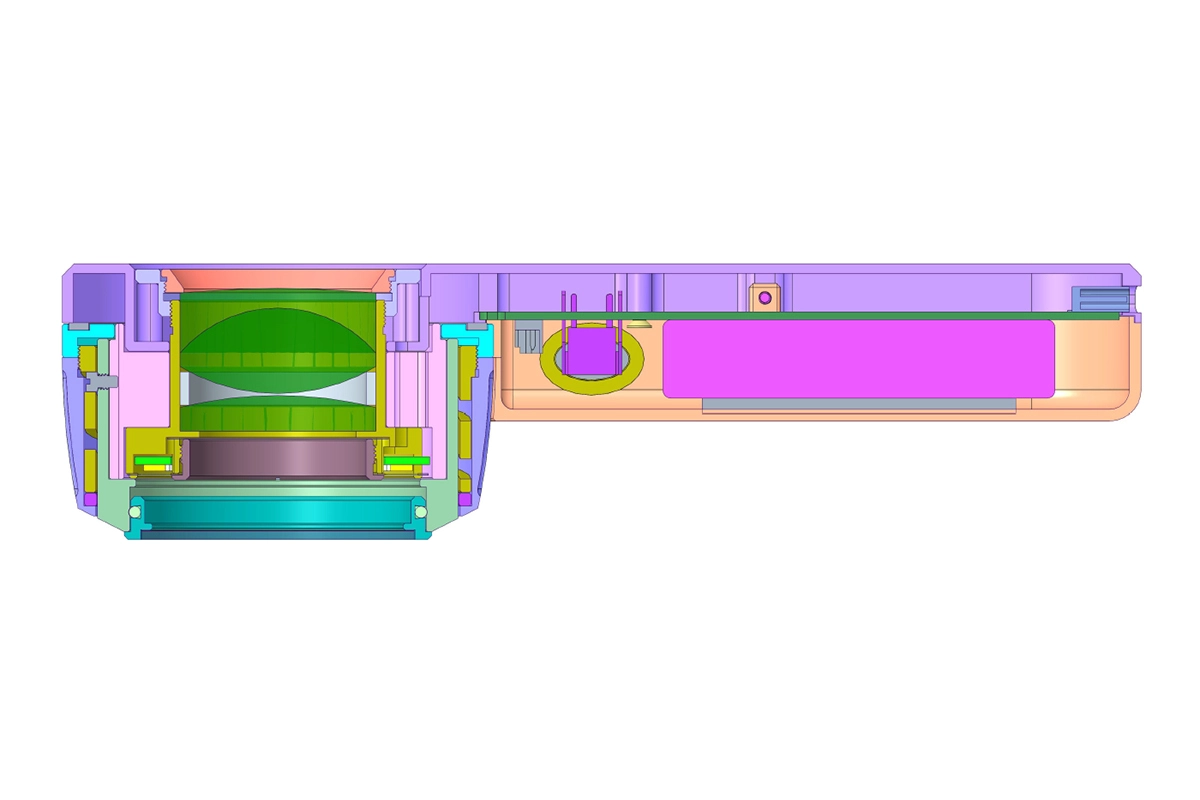
A professional dermatoscope is a sophisticated optical instrument. Unlike a standard magnifying glass, it is designed to eliminate surface reflection and glare, allowing light to penetrate the stratum corneum.
- High-Quality Magnifying Lens: Typically providing 10x to 30x magnification with achromatic optics to prevent color distortion.
- Controlled LED Illumination: High-intensity LEDs ensure the skin is brightly and evenly lit.
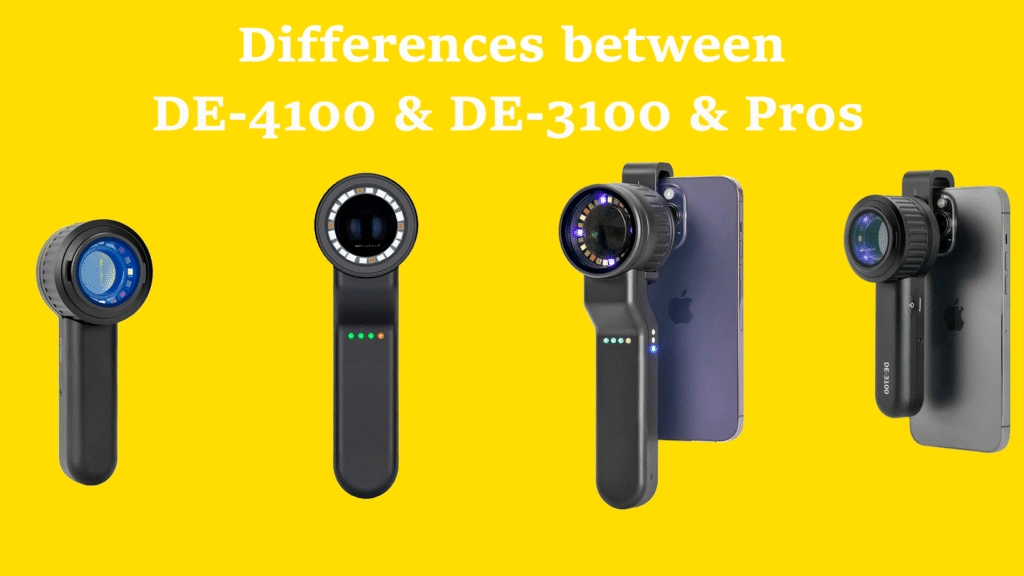
- Polarization Filters: Modern devices like the IBOOLO DE-4100 allow clinicians to toggle between polarized and non-polarized light to visualize different skin layers.
Polarized vs. Non-Polarized Dermoscopy: A Critical Distinction
Understanding how these modes work is essential for accurate diagnosis:
- Non-Polarized (Contact) Dermoscopy: Requires direct skin contact and an immersion fluid (oil or alcohol). It is excellent for visualizing superficial structures like "milia-like cysts."
- Polarized (Non-Contact) Dermoscopy: Uses cross-polarization to block reflected light. This mode is a "game-changer" for visualizing vascular patterns (blood vessels) and deeper dermal pigment without touching the lesion, reducing the risk of cross-infection.
The Clinical Value: Why Professional Dermoscopy Matters
The true dermoscopy meaning in a clinical setting is its life-saving potential. According to research from the NYU Langone Medical Center, visual inspection alone has a diagnostic accuracy for melanoma of approximately 64%. However, when a professional dermatoscope is used by trained practitioners, diagnostic accuracy increases by 10% to 27%.
Beyond skin cancer, it is a vital tool for:
- Trichoscopy: Evaluating hair and scalp disorders.
- Onychoscopy: Analyzing nail abnormalities and subungual hemorrhages.
- Inflammatory Diseases: Monitoring psoriasis, lichen planus, and scabies.
Dermoscopy FAQ: Common Questions
Q: Is there a difference between a dermatoscope and a dermoscopi?
A: Standard medical terminology uses the term "dermatoscope." The term dermoscopi is often a regional variant or a common misspelling. Regardless of the term used, the diagnostic principle remains the same: high-resolution visualization of the skin.
Q: Can I use my smartphone with a dermatoscope?
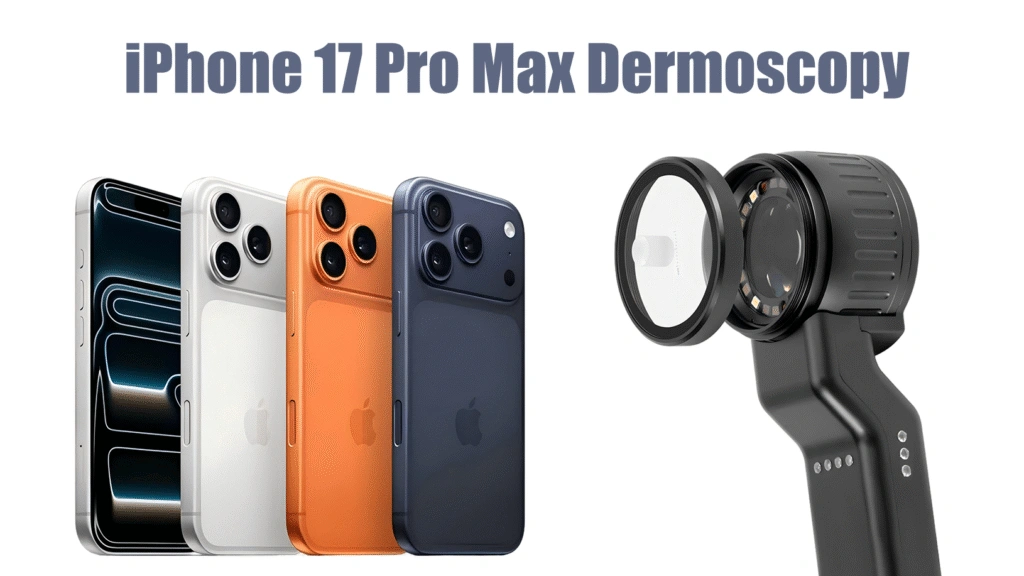
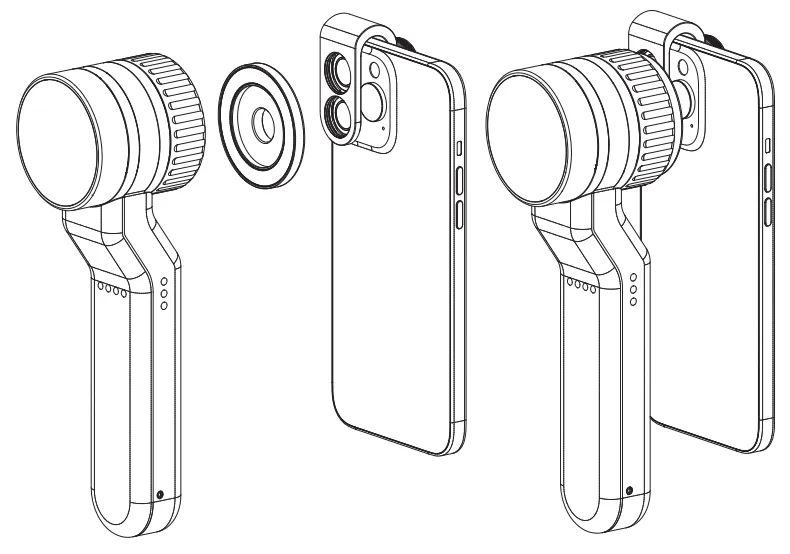
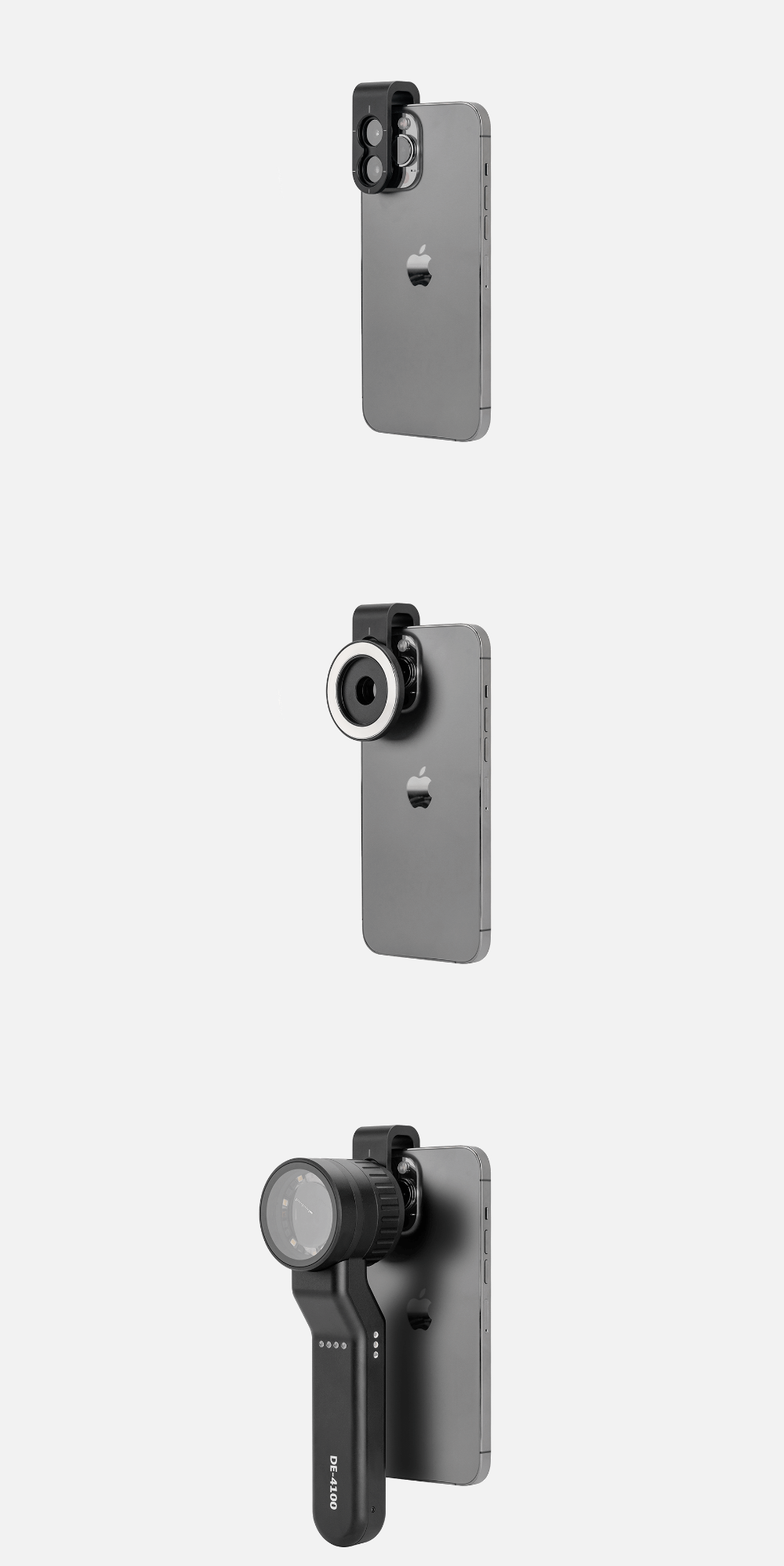
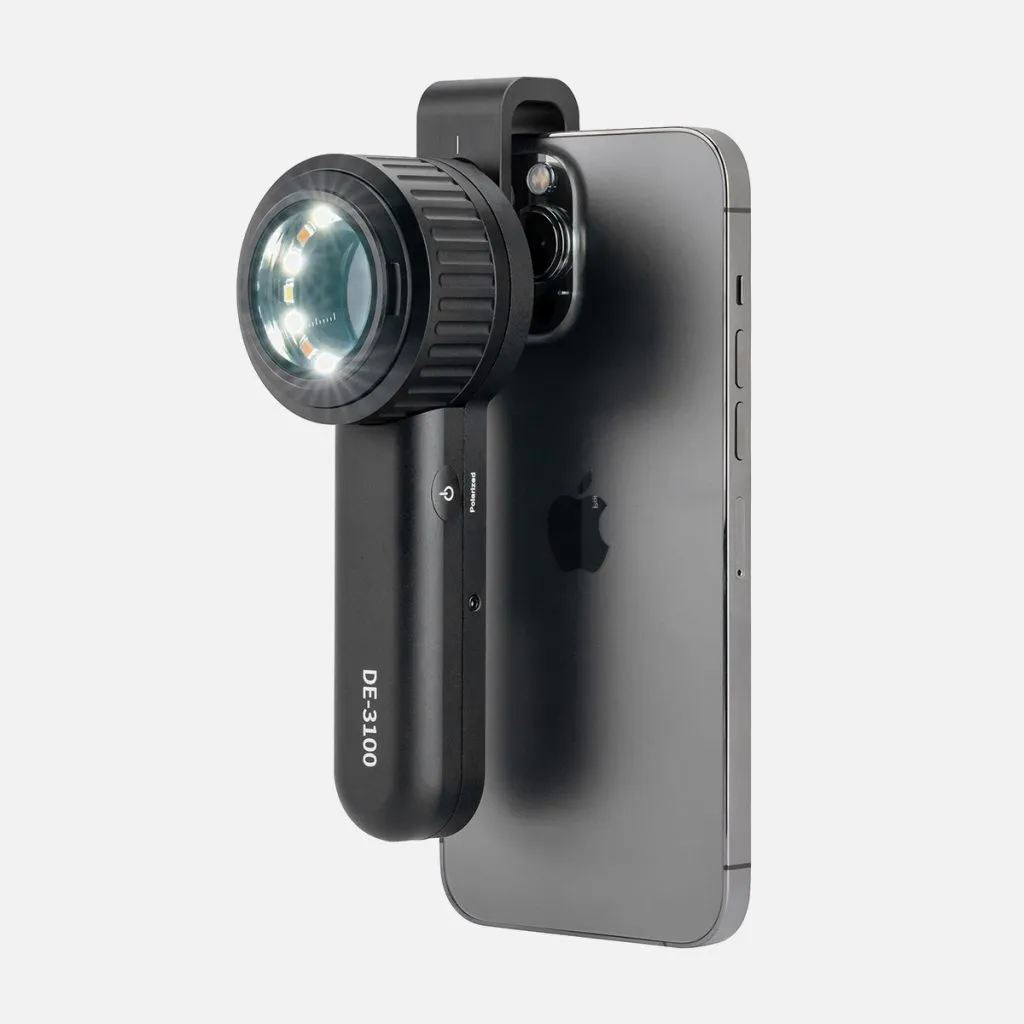
A: Yes. Modern digital systems allow you to attach a dermatoscope to your smartphone for high-definition image capture and teledermoscopy, which is a cornerstone of modern skin health surveillance.
Looking for Professional-Grade Diagnostic Tools?
As a leading dermatoscope supplier, IBOOLO offers ISO 13485 certified devices designed for clinical precision and ease of use.
Recommended reading
Reviews – IBOOLO
IBOOLO is a camera lens manufacturer based in China with more than 11+ years of experience in manufacturing, catering to a variety of requirements. We have become experts in the design and manufacture of a wide variety of Dermatoscope, Microscope, Woods Lamp and Macro lens.
Polarized light dermoscopy: for clearer skin lesion screening - IBOOLO
Polarized light is key in dermoscopy devices for skin lesion screening. IBOOLO-polarized dermatoscopes block surface reflections and clearer observation of subsurface skin anatomy for diagnoses.
High Quality Dermoscopy Meaning Created in Our Products Supply Based in China - IBOOLO
Our China products supply hub couples world-class portability with elite precision, using seasoned expertise to develop high quality dermoscopy meaning for flawless skin visualization anywhere through compact size.
What is a dermatoscope ?
Dermatoscope (Dermoscopy) is a handheld optical device usually used to examine skin or hair much more accurately. It combines high quality magnify lens and powerful lighting system to enhance the view of deeper skin. Without any side effective or adverse reactions, also avoiding unnecessary biopsies and surgeries, it is very helpful for doctors to diagnose skin lesions,such as infection skin disease,pigmented skin disease,inflammatory skin disease,vascular skin disease, onychosis and so on.Only by clearly understanding dermoscopy meaning,people can use it in high efficiency.
Types of dermatoscope
There are three main types of dermatoscopy, polarized dermatoscopy ,nonpolarised dermatoscope and amber dermatoscopy.
•Polarized dermatoscopy: To eliminate surface glare and reflection of the skin by utilizing polarized light, it gets deeper peer of skin and can clearly display the dermis structure.No need to use liquid on skin surface and no need to touch skin,it is more safety for diagnosing skin lesion and avoiding the risk of cross infection.
•Nonpolarized dermatoscopy: Nonpolarized dermoscopy can clearly show the cuticular layer of skin with or without liquid medium.
• Amber dermatoscopy: By using amber dermoscopy, we can clearly inspect the outline of structure of skin dermis and epidermis from its shape,size,color,bugle,etc.
As we can know from above, three types of dermoscopy provide complementary skin information, so that diagnose will be more accurte and comprehensive.
Principle of dermatoscope
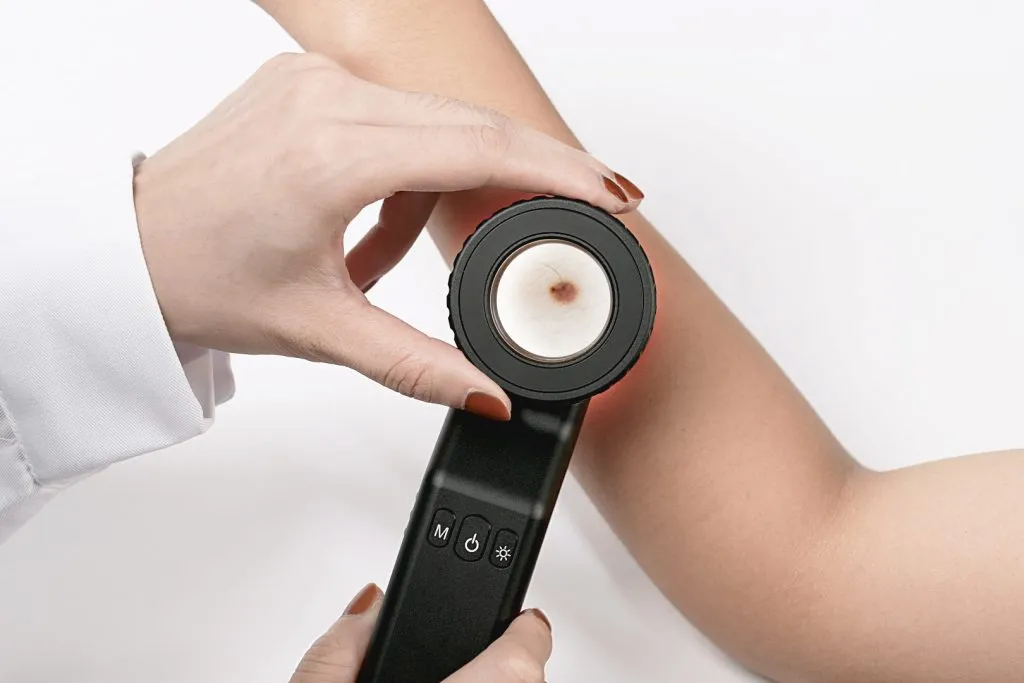
Dermatoscopy combines the medical technology and principle of physics and optics. Dermatologists can observe skin lesions accurately and objectively by dermatoscopy, seeing through appearance to the essence, seeing through surface layer to deep layer,seeing through epidermal layer to dermal layer,seeing through naked eye to lens.
For the observation of skin lesion,dermatoscopy plays a role far more than a magnifier. It uses polarizing filter to filter out the diffuse reflection light and then with the aid of optical,
it filters out the diffuse light of the epidermis by using polarizing filters, and then through the optical amplification equipment to observe the skin including under the epidermis, dermal-epidermis junction, pigment of the dermal papillary layer and blood vessels such skin structures which cannot be saw by naked eyes. Knowing dermoscopy meaning deeply will help skin doctors work more easily and confidently.
What is the use of dermastocope?
By using dermatoscopy, dermatologists can diagnose skin lesions and diseases more accurately. And dermascope is easy to operate. The whole process of using dermoscope is simple and painless. With the help of dermoscopy, person can examine their own hair,scalp,skin, and nails clearly. Then they can send images captured by phone or tables under dermoscope to dermatologists for analysis.
Then what is a dermatoscope? Dermatscopy is hand-held device which is also known as dermoscope. It usually used in skin lesions examination by dermatologists. It reveals structures of skin surface and subsurface invisible to naked eyes by the technology combining optics and physics. Dermatscope creates a process of green,painless and noninvasive. That is the dermoscopy meaning. There are common uses of dermatoscope as below:
Common Uses:
1, Detecting hair loss and alopecia areata
2, Distinguishing melanoma from pigmented naevus
3, Identifying skin cancer from its benign lesion
4, Inspecting other skin disease such as lichen planus, vitiligo and scabies
Which kind of diseases can be detected by dermoscopy?
By dermoscopy, doctors can detecte skin lesions, skin cancer, dermatitis, infections, acne, hair loss and nail problmes, etc.
Common diseases:
Begin melanoma, early skin tumor, basal cell carcinoma, benign and malignant cascular lesions, etc.
Many skin diseases can be examined under dermoscopy otherwise routine naked eyes cannot pick them out. That is dermoscopy meaning to the whole medical world.
What will effect the examination of dermatoscopy?
What is a dermatoscope? Dermoscopy is a device usually used by skin doctors for examining skin lesions. It is hand-held and easy to operate. It can greatly enhance the view of inspection to improve the diagnostic accuracy. Otherwise, there are some factors which will effect the results of dermoscopy examination, such as lighting conditionS, ointment on skin surface, device quality and setting,etc.
1.Lighting conditions
Poor or Hard light both will affect dermatoscope examination. So proper light is very necessary for the accurate examination of dermatoscope.
2.Ointment on skin surface
Ointment will bring disturb for dermatoscope examination. Before dermatoscopy examination, people do not apply any ointment to the skin to avoild misdiagnosis. It is better to keep the skin clear and try as far as possible.
3.Device quality and setting
Good quality for dermatoscopy is crucial for dermatologists inspection. And its setting whether can be adjustable matters the possibility of customization for different kinds of skin lesions.
Can dermatoscope detect skin cancer?
Yes, dermatoscope can detect skin cancer. As we know dermoscopy meaning for dermatologists, with magnification and illumination of dermatscope, examination by dermatoscope increases not only specificity but also sensitivity for skin cancer. It can detect smaller and thinner skin cancer from its structure,pattern,shape which may be missed by naked eyes, increasing biopsy of melanomas,reducing the the biopsy of lesion beginning.
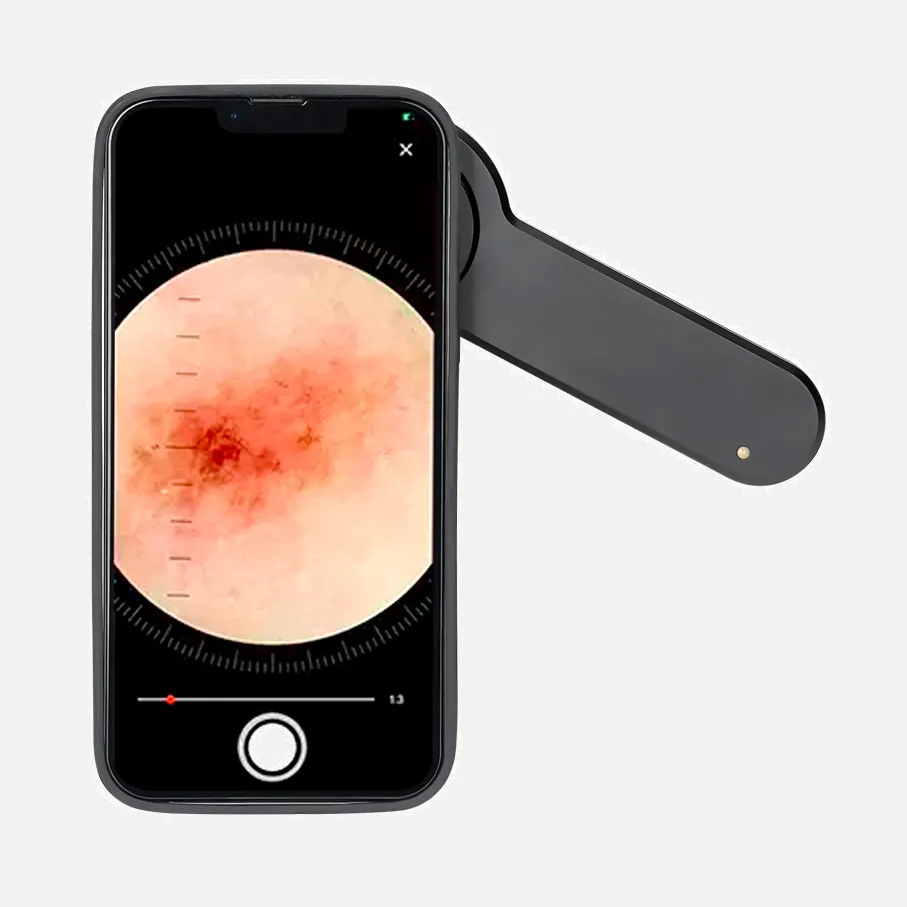
What does skin cancer look like under dermatoscope?
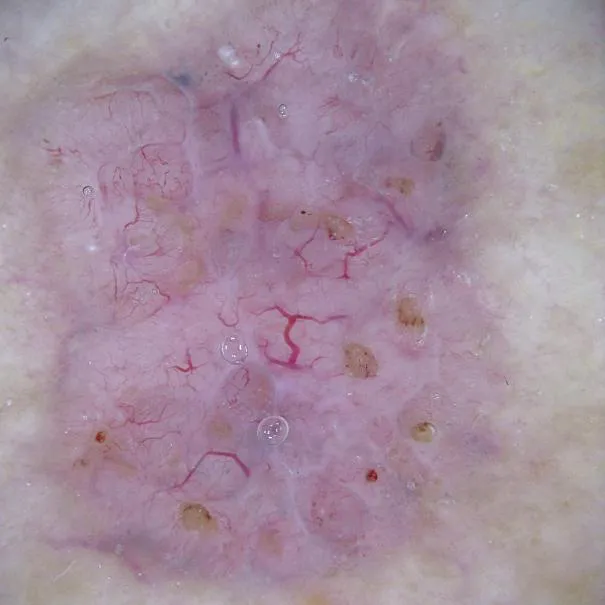
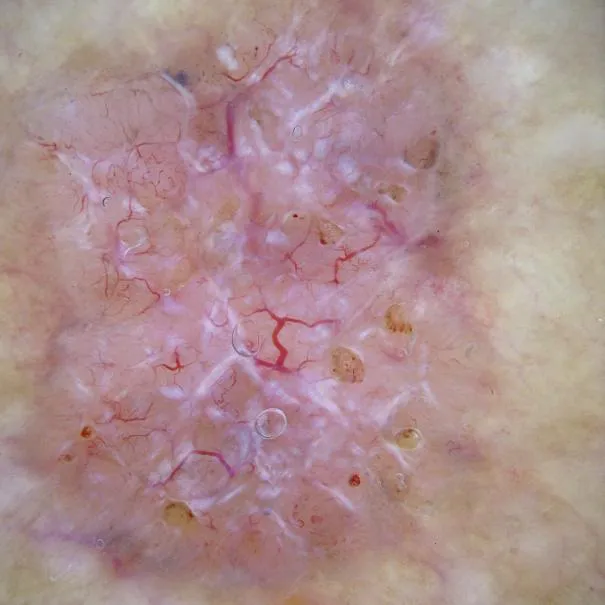
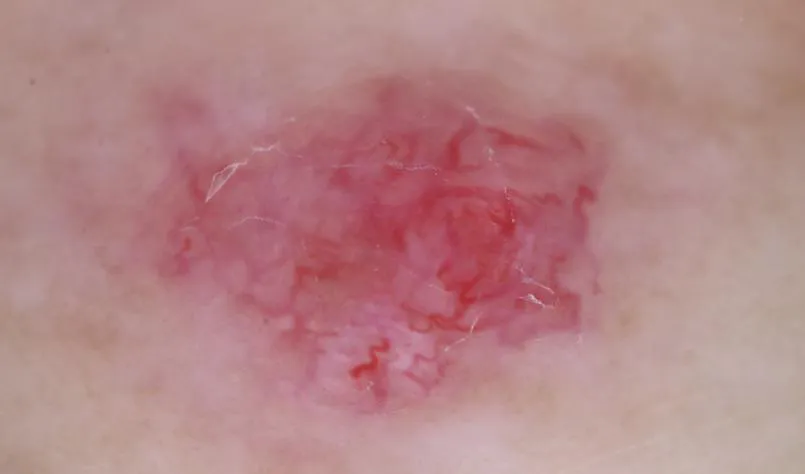
When examining skin cancer under a dematoscope, there are various features presented with valuable information which invisible by routine inspection.Then what is dermatoscope? Dermatoscope is often also called epiluminescence microscopy, which is a hand-held aid device equip skin doctors observing skin cancer more effectively. Because dermatoscope enhance the visualization of skin lesions. There are types of skin cancer with diverse key features showed under dermatscope, such as multiple brown dots, blue-white veil,scar-like depigmentation, pseudopods, squamous cell carcinoma, radial streamlines,peripheral black spots/globules, multiple colors, broad nedwork, focal sharp cut odd boundary, malignant melanoma, basel cell carcinoma ,ect.
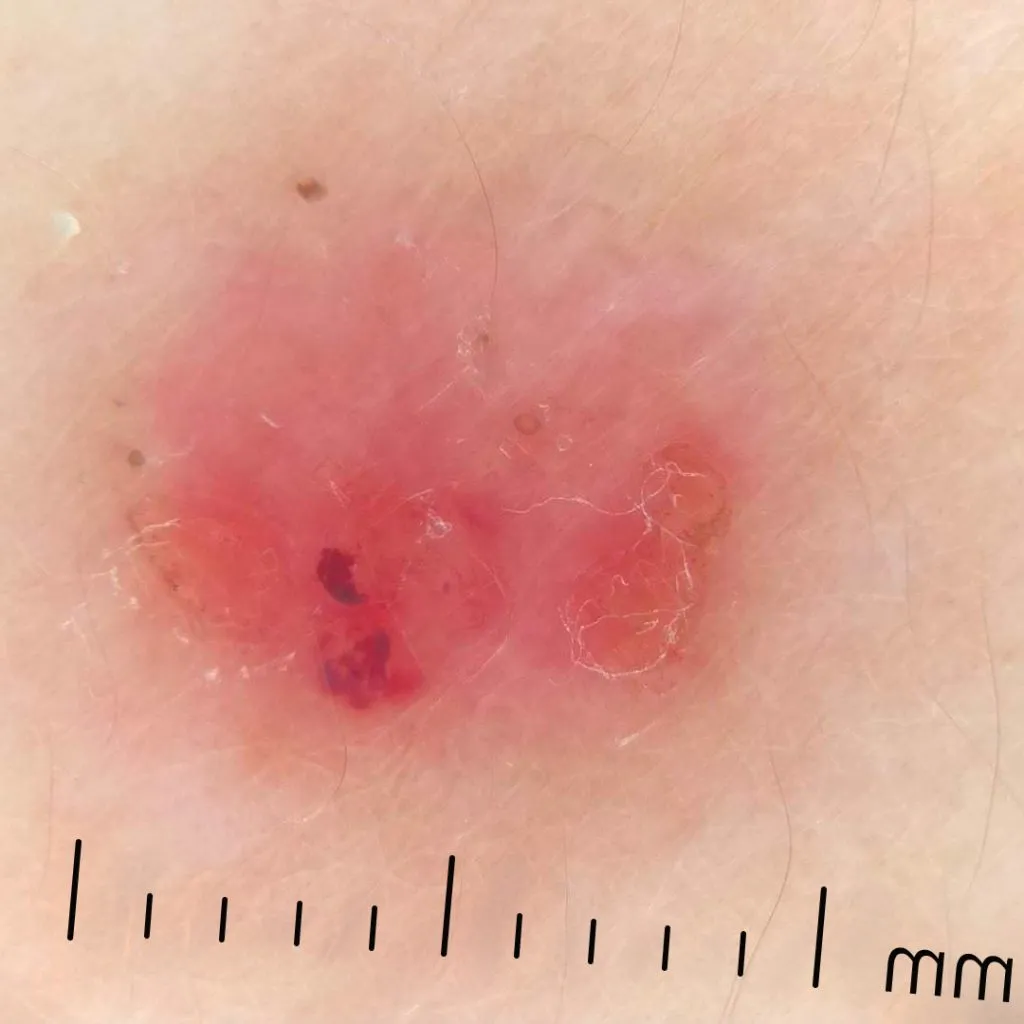
Is dermatoscope accurate?
People will wonder is dermoscope accurate, so first let us to understand what is a dermatoscope?
Dermatoscopy, also known as a dermoscope, is a dependable optical tool for detecting skin disease or skin problems. It enhances the visibility by polarized light or non-polarized light or amber light combining magnification. Particularly in experienced hands, it can detect and diagnose skin situations much more clearly and accurately.
Compared with routine examination by naked eyes, dermatologist can use dermatoscope uniting phone or tablet to capture photos of skin lesion layers from epidermis to dermis. It not only saves time for people in inspection but also creates much more convenience for analysis.
Report from Oncology Section of the Skin and Cancer Unit of NYU Langone Medical Center, that dermatologist can only diagnose 65%~80% of melanomas. Accuracy of diagnosis by dermatologists is only 64% (Grin et al.,1990). But by using dermoscopy, it increases the accuracy of diagnosis by 10~27% (Kittler et al.,2002)
Dermoscopy meaning is very important for various of skin examinations, especially in uncommon skin problems. Even though, it still needs to combine the clinical knowledge and clinical experience to diagnose skin lesions much more accuracy.